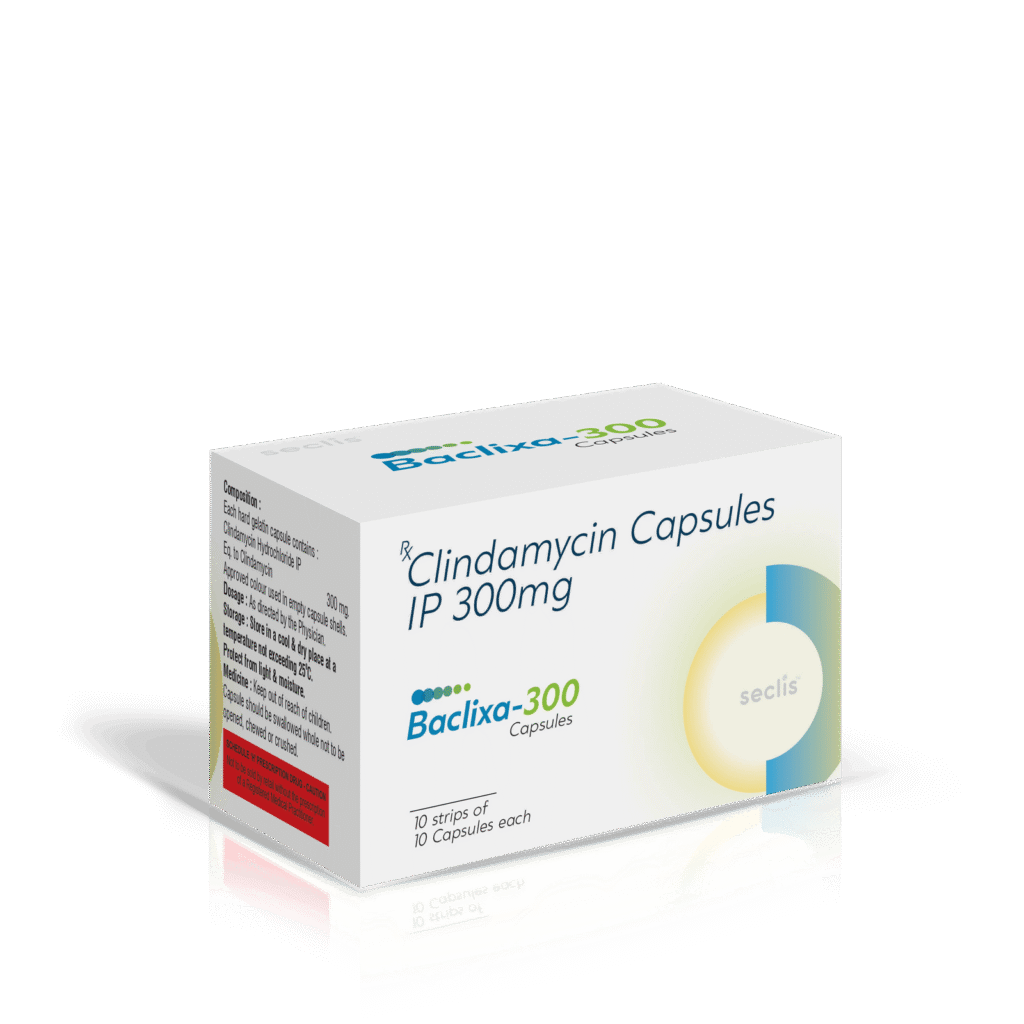
BACLIXA 300
Clindamycin 300mg
Quick Facts
Key Benefits
Mechanism of Action
Clindamycin is a lincosamide antibiotic that inhibits bacterial protein synthesis by binding to the 50S ribosomal subunit — specifically to the 23S rRNA at the peptidyl transferase centre. This binding blocks the peptidyl transferase reaction, preventing the formation of peptide bonds between amino acids during chain elongation. The result is premature termination of polypeptide chains and inhibition of bacterial protein production.
Clindamycin's key pharmacological characteristic is its exceptional penetration into specific tissue types and its remarkable activity against anaerobic bacteria. It achieves very high concentrations in bone (where concentrations exceed plasma levels), abscess fluid, and sebaceous glands — making it the preferred agent for anaerobic osteomyelitis, dental abscesses, and acne vulgaris respectively.
Against anaerobes, clindamycin maintains reliable activity against Bacteroides fragilis group, Prevotella, Porphyromonas, Fusobacterium, Peptococcus, and Peptostreptococcus — the organisms responsible for intra-abdominal, gynaecological, dental, and skin anaerobic infections. Against gram-positive aerobes, it covers Streptococcus pyogenes, S. pneumoniae, and MSSA — though MRSA resistance is common.
Clindamycin's post-antibiotic effect is prolonged — bacterial regrowth is inhibited for 2–4 hours after drug concentrations fall below the MIC, allowing dosing every 8 hours despite a relatively short plasma half-life.
The OXCARBA dye used in BACLIXA 300 serves as a batch-specific quality identifier for authentication and counterfeit prevention.
Indications
BACLIXA 300 is indicated for serious anaerobic and mixed infections, particularly where bone penetration, abscess fluid penetration, or gram-positive/anaerobic dual coverage is required.
Gynaecological Infections (Primary Indication): Bacterial vaginosis (as oral alternative to metronidazole), pelvic inflammatory disease (in combination with a fluoroquinolone to cover aerobes), post-partum endometritis, and pelvic abscess. Clindamycin's coverage of the Bacteroides species most commonly isolated in gynaecological infections makes it a first-choice agent in this specialty.
Acne Vulgaris: Clindamycin is the most widely used systemic antibiotic for moderate-to-severe inflammatory acne, acting against Cutibacterium acnes (formerly Propionibacterium acnes) and reducing sebaceous gland inflammation. Typically used in combination with benzoyl peroxide or a topical retinoid to prevent resistance.
Dental Infections: Periapical abscess, periodontitis, and necrotising fasciitis of the orofacial region where anaerobic bacteria are the primary pathogens. Clindamycin's excellent bone penetration is particularly valuable for dental infections involving the jaw.
Bone and Joint Infections: Osteomyelitis and septic arthritis caused by MSSA and anaerobic organisms — clindamycin achieves bone concentrations 30–50% higher than plasma.
Skin Infections: Severe cellulitis, necrotising fasciitis, and streptococcal toxic shock syndrome — clindamycin inhibits toxin production (rather than killing the organism) in toxin-mediated streptococcal infections.
Aspiration Pneumonia: Anaerobic lung infection following aspiration — clindamycin plus a fluoroquinolone covers both anaerobic and aerobic components.
Dosage & Administration
Dosage and administration should be as prescribed by a qualified doctor or medical professional. Do not self-medicate. Always follow your physician's instructions regarding dose, frequency and duration of treatment.
Why BACLIXA 300?
Clindamycin occupies an irreplaceable clinical niche — it is the only oral antibiotic that simultaneously covers anaerobic bacteria, penetrates bone reliably, and reduces bacterial toxin production. These properties make it essential in gynaecology (pelvic anaerobic infections), dentistry (jaw bone infections), dermatology (acne vulgaris), and surgery (necrotising infections).
The OXCARBA dye in BACLIXA 300 is a manufacturing quality marker that allows prescribers and pharmacists to visually identify the product batch and verify authenticity — an important quality assurance feature in a market where clindamycin counterfeiting has been documented.
DPCO regulation of clindamycin 300mg is critical for dermatology practice, where acne patients require 3–6 month antibiotic courses. Unregulated pricing would make sustained courses financially inaccessible for most patients, leading to premature discontinuation and incomplete acne control.