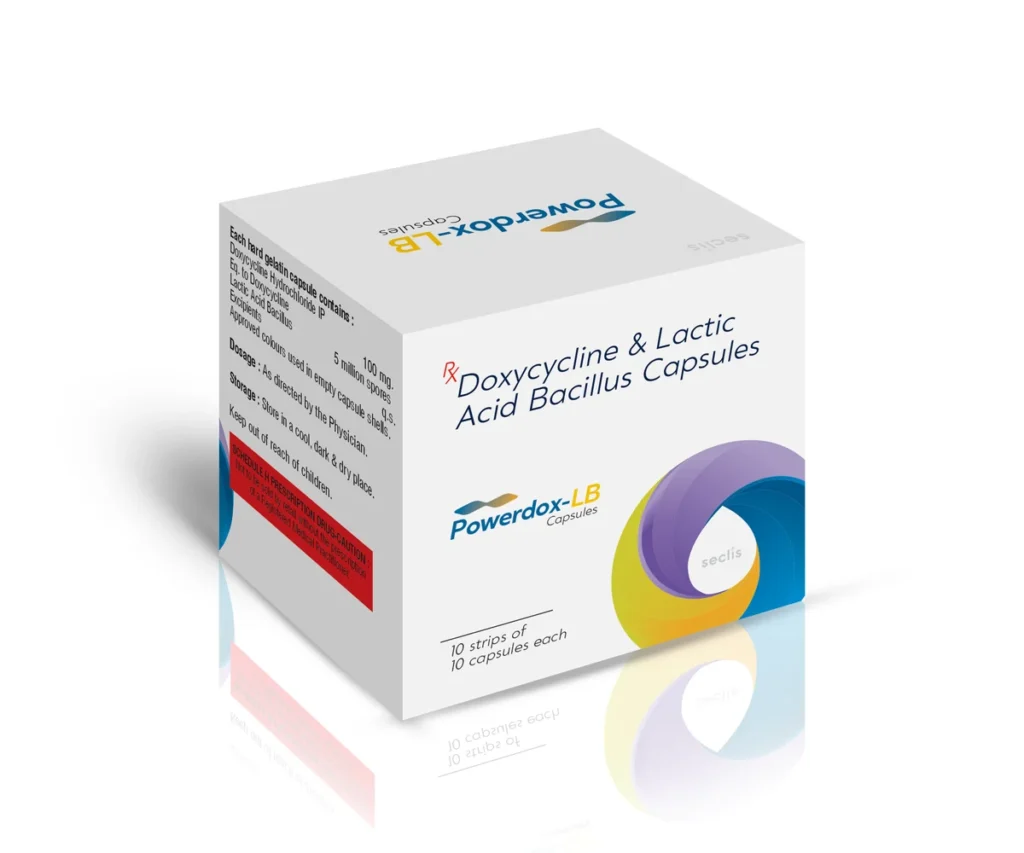
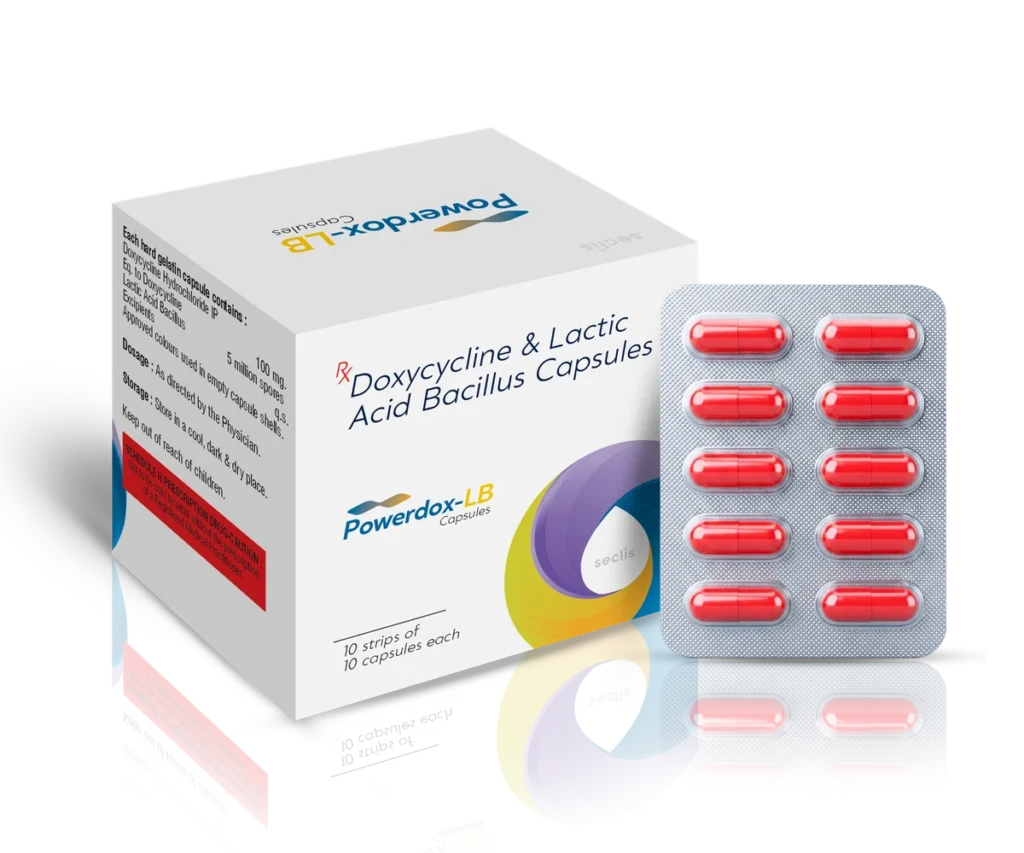
POWERDOX LB
Doxycycline HCl 100mg + Lactic Acid Bacillus 5 Million Spores
Quick Facts
Key Benefits
Mechanism of Action
Doxycycline is a second-generation tetracycline antibiotic with exceptional breadth of antimicrobial activity across bacterial, atypical, intracellular, and protozoal pathogens. It inhibits bacterial protein synthesis by binding reversibly to the 30S ribosomal subunit, blocking the attachment of aminoacyl-tRNA to the ribosomal acceptor (A) site. Without incoming amino acids, peptide chain elongation halts and protein synthesis stops — a bacteriostatic mechanism that prevents bacterial growth and allows the immune system to clear the infection.
Doxycycline's lipophilic chemistry gives it several important pharmacological advantages over first-generation tetracyclines:
— Oral bioavailability of 93% (highest of any tetracycline), enabling reliable systemic drug levels without food-related absorption interference
— Half-life of 18–22 hours, enabling once or twice-daily dosing
— Exceptional intracellular penetration — concentrations inside macrophages, neutrophils, and epithelial cells far exceed plasma levels, making it the drug of choice for intracellular pathogens including Rickettsia, Chlamydia, Brucella, and Q fever
The spectrum of doxycycline is uniquely broad: it covers gram-positive aerobes, gram-negative aerobes (including some Pseudomonas), anaerobes, intracellular pathogens (Rickettsia, Ehrlichia, Chlamydia, Mycoplasma, Coxiella), spirochaetes (Borrelia, Leptospira, Treponema), protozoa (Plasmodium — malaria prophylaxis), and atypical organisms — a combination that no other single antibiotic class matches.
Lactic Acid Bacillus (5 million spores) protects the gut microbiome during doxycycline therapy. Tetracyclines suppress gastrointestinal anaerobic flora, causing diarrhoea in approximately 20–30% of patients — the most common reason for premature discontinuation. LB competitively restores commensal flora and significantly reduces diarrhoea incidence, particularly important for the long-course doxycycline regimens used in acne (3–6 months) and malaria prophylaxis.
Indications
POWERDOX LB has one of the broadest indication profiles of any antibiotic, spanning dermatology, pulmonology, infectious disease, sexual health, and travel medicine.
Acne Vulgaris (Primary Indication — Dermatology): Doxycycline 100mg daily or twice daily is the most commonly prescribed systemic antibiotic for moderate-to-severe inflammatory acne. It suppresses Cutibacterium acnes and reduces sebaceous inflammation. Long courses (3–6 months) require gut protection — the LB component directly addresses this.
Atypical Pneumonia: Community-acquired pneumonia with suspected Mycoplasma pneumoniae, Chlamydia pneumoniae, or Legionella — doxycycline is WHO-recommended and guideline-endorsed for atypical CAP, particularly as an alternative to macrolides.
Rickettsial Infections: The drug of choice for all Rickettsial diseases — scrub typhus, Rocky Mountain spotted fever, epidemic typhus, and Q fever (Coxiella burnetii). A 7-day course at 100mg twice daily is curative.
Lyme Disease: The first-line treatment for early Lyme disease (erythema migrans) and prophylaxis following tick bites in endemic areas.
STIs: Chlamydia trachomatis (urethritis, cervicitis, PID), non-gonococcal urethritis, and lymphogranuloma venereum — 100mg twice daily for 7 days.
Malaria Prophylaxis: 100mg daily for travellers to chloroquine-resistant areas — started 1–2 days before travel and continued 4 weeks after return.
MRSA Infections: Doxycycline has demonstrated activity against community-associated MRSA in skin and soft tissue infections — an emerging and clinically important indication.
Dosage & Administration
Dosage and administration should be as prescribed by a qualified doctor or medical professional. Do not self-medicate. Always follow your physician's instructions regarding dose, frequency and duration of treatment.
Why POWERDOX LB?
Doxycycline's extraordinary breadth of activity — spanning bacterial, intracellular, spirochaetal, rickettsial, and protozoal pathogens — makes it a pharmacological outlier. No other antibiotic that can be safely prescribed in primary care covers as many clinically relevant organisms. This breadth drives consistent prescribing across dermatology, infectious disease, pulmonology, STI management, and travel medicine.
The LB component in POWERDOX LB is particularly important for Indian practice, where doxycycline is frequently prescribed for 3–6 month acne courses. Antibiotic-associated diarrhoea during such prolonged courses significantly undermines compliance and acne control. The 5 million spore LB count in POWERDOX LB provides meaningful gut flora restoration throughout the course, making long-term tetracycline therapy more tolerable and more likely to be completed.
For franchise partners, POWERDOX LB spans multiple high-volume prescribing specialities — dermatology (acne), infectious disease (rickettsia, Lyme), pulmonology (atypical pneumonia), and travel medicine — providing breadth of prescriber reach from a single product. The ₹1250 MRP positions it appropriately for dermatology practice where branded doxycycline combinations command premium pricing.