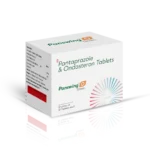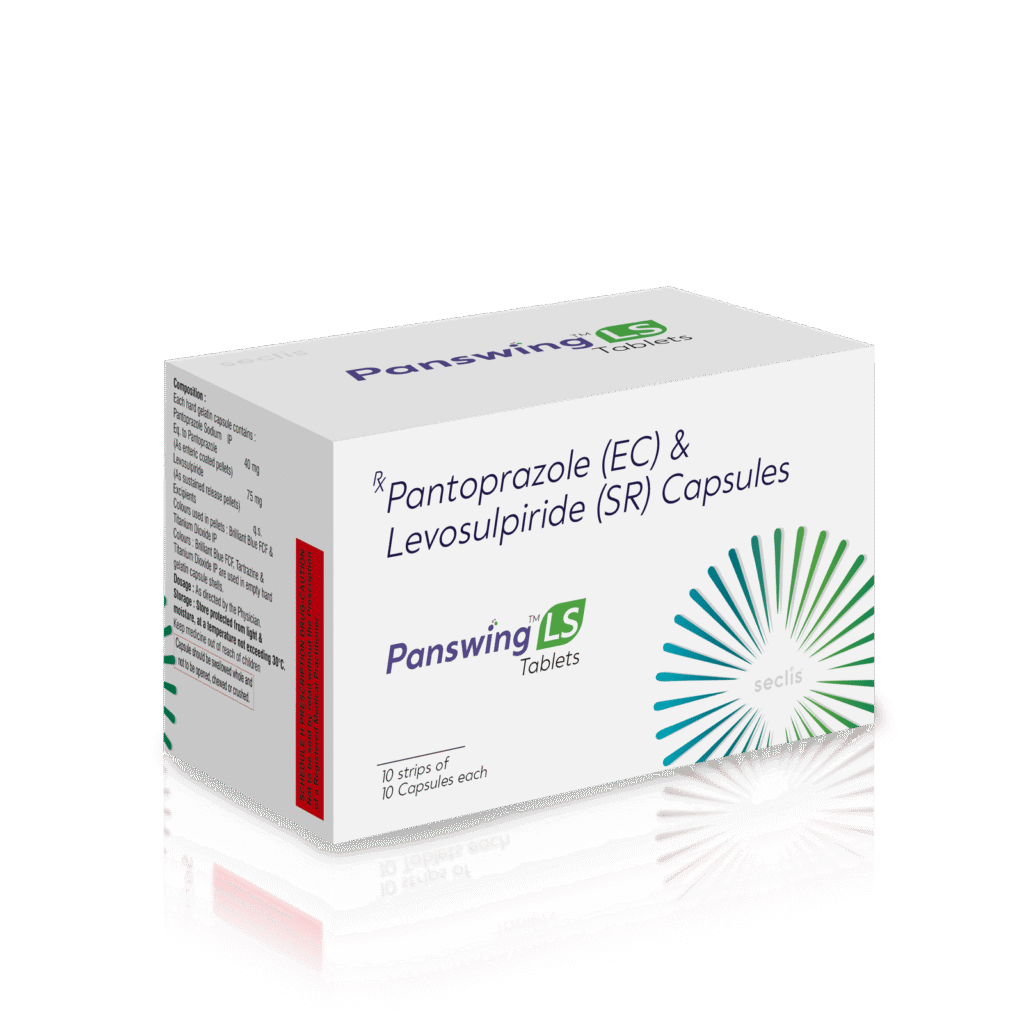
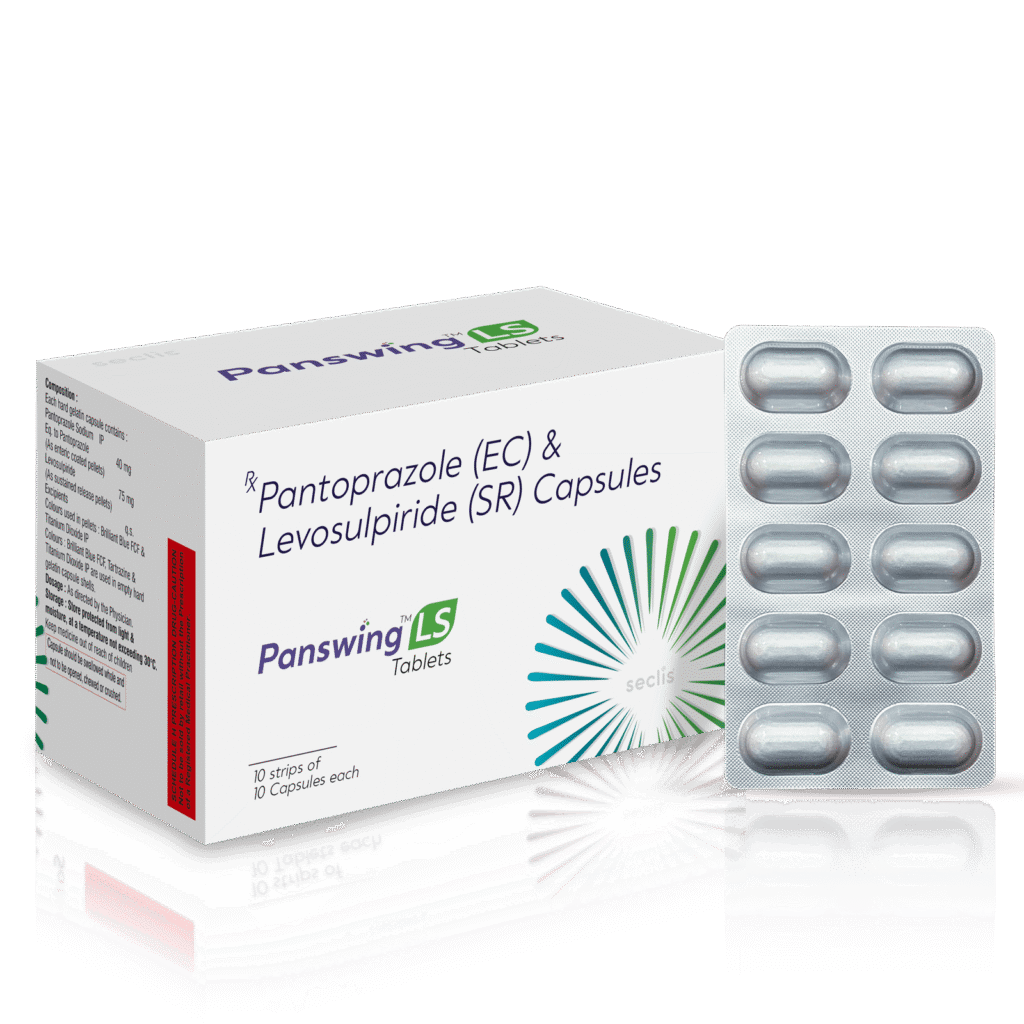
PANSWING™ LS
Pantoprazole 40mg + Levosulpiride 75mg
Quick Facts
Key Benefits
Mechanism of Action
PANSWING™ LS is a pharmacologically rational fixed-dose combination addressing both the acid hypersecretion and the gastric motility dysfunction that together drive the most common upper gastrointestinal disorders.
Pantoprazole (40mg) is a second-generation proton pump inhibitor (PPI) that irreversibly inhibits H⁺/K⁺-ATPase — the proton pump on the gastric parietal cell's secretory canaliculus. Pantoprazole is a prodrug that requires acid activation: at low pH in the secretory canaliculus, it converts to a sulphenamide that forms a covalent, irreversible disulphide bond with cysteine residues on the H⁺/K⁺-ATPase pump. This permanent inactivation continues until new pump protein is synthesised (24–48 hours), explaining why pantoprazole's acid-suppressive effect lasts well beyond its 1–2 hour plasma half-life. Among PPIs, pantoprazole has the lowest CYP2C19 drug interaction liability, making it the preferred PPI in patients on complex polypharmacy regimens.
Levosulpiride (75mg) is the levo-isomer of sulpiride, acting as a selective dopamine D2 receptor antagonist with prokinetic and anti-emetic properties. In the gastrointestinal tract, dopamine inhibits acetylcholine release from myenteric plexus nerve endings — reducing intestinal motility and peristalsis. Levosulpiride blocks D2 receptors in the GI tract, removing this dopaminergic inhibitory tone and restoring acetylcholine-mediated peristaltic activity. The result is: accelerated gastric emptying (reducing dyspeptic bloating and nausea), enhanced antroduodenal coordination (reducing bile reflux), and increased lower oesophageal sphincter tone (reducing gastro-oesophageal reflux). Levosulpiride also acts centrally on D2 receptors in the chemoreceptor trigger zone (CTZ), providing anti-emetic activity that complements its pro-kinetic GI effects.
Indications
PANSWING™ LS is indicated for upper gastrointestinal conditions where both acid suppression and prokinetic motility enhancement are therapeutically required — the dual-mechanism combination addressing conditions where neither PPI nor prokinetic monotherapy is sufficient.
GORD with Delayed Gastric Emptying: The most important combined indication. In patients with GORD associated with gastroparesis or slow gastric emptying, PPI therapy alone reduces acid exposure but fails to address the underlying motility disorder driving reflux. Levosulpiride accelerates gastric emptying, reducing intragastric volume and pressure — the primary mechanical driver of gastro-oesophageal reflux.
Functional Dyspepsia: Post-prandial distress syndrome (bloating, early satiety, nausea after meals) with accompanying acid symptoms — the combination of pantoprazole (acid) and levosulpiride (prokinetic) addresses both pathophysiological contributors.
Diabetic Gastroparesis with GORD: Diabetes-associated gastroparesis causes delayed gastric emptying and reflux — levosulpiride's prokinetic action directly treats the gastroparesis while pantoprazole manages the acid reflux consequence.
Non-Ulcer Dyspepsia: Functional epigastric symptoms without structural pathology — the combination improves both acid-related and motility-related symptom dimensions.
Post-Operative Nausea and Gastric Stasis: Following abdominal or upper GI surgery where both acid suppression (mucosal protection) and prokinetic stimulation (restoration of GI motility) are required simultaneously.
Dosage & Administration
Dosage and administration should be as prescribed by a qualified doctor or medical professional. Do not self-medicate. Always follow your physician's instructions regarding dose, frequency and duration of treatment.
Why PANSWING™ LS?
Functional dyspepsia, GORD, and gastroparesis collectively represent the largest outpatient gastroenterology caseload in Indian practice. Pantoprazole + levosulpiride combinations are among the most frequently prescribed fixed-dose gastroenterology products in India — a market driven by the recognition that acid suppression alone is insufficient for patients with overlapping acid and motility components to their symptoms.
PANSWING™ LS's Alu-Alu packaging is particularly important — pantoprazole granules within the capsule are enteric-coated to protect them from gastric acid degradation before reaching the small intestine for absorption. Moisture-compromised enteric coatings can dissolve prematurely, significantly reducing pantoprazole's bioavailability and efficacy. Alu-Alu blistering prevents this moisture ingress throughout the product's shelf life.
The PANSWING™ brand — covering LS (levosulpiride), IT (itopride), and HP Kit (H. pylori eradication) — positions Seclis Labs as a comprehensive upper GI specialist, with products covering every major gastroenterology indication from motility disorders through to H. pylori eradication.