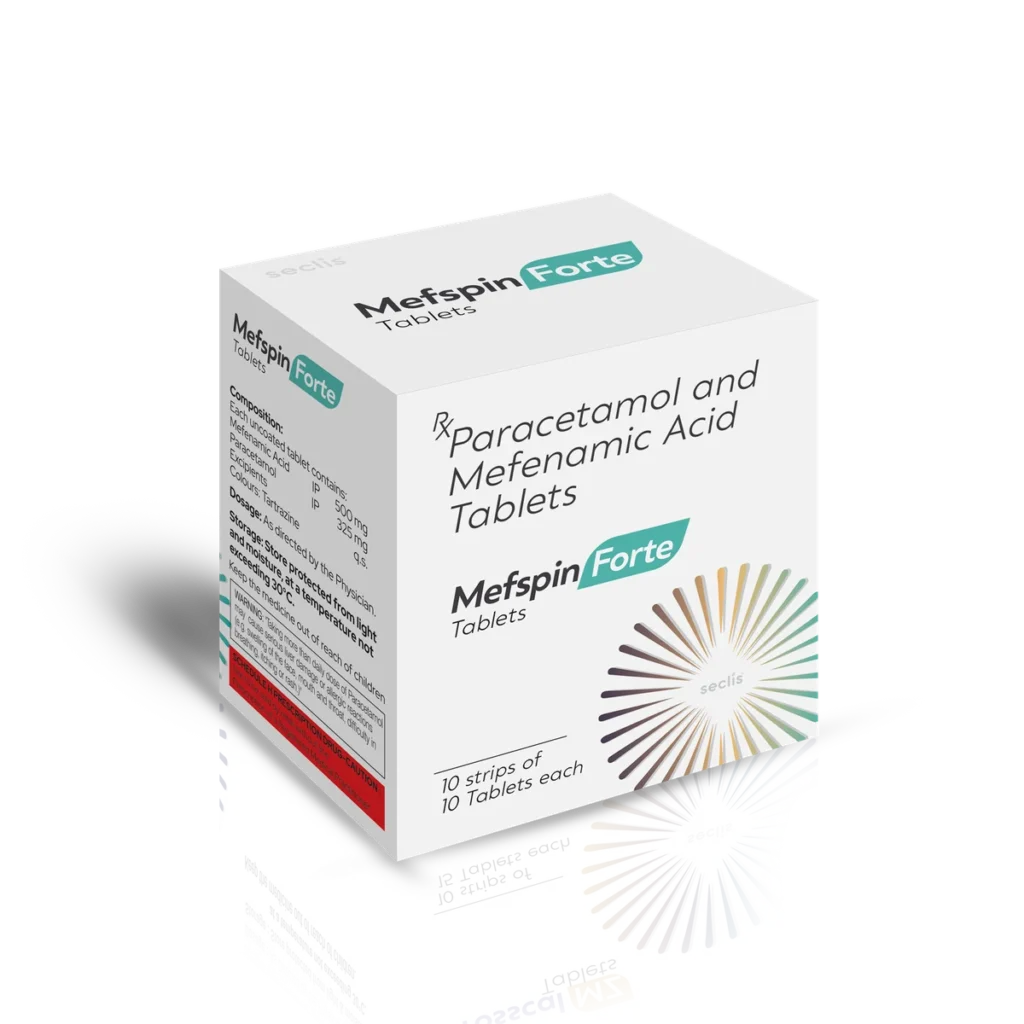
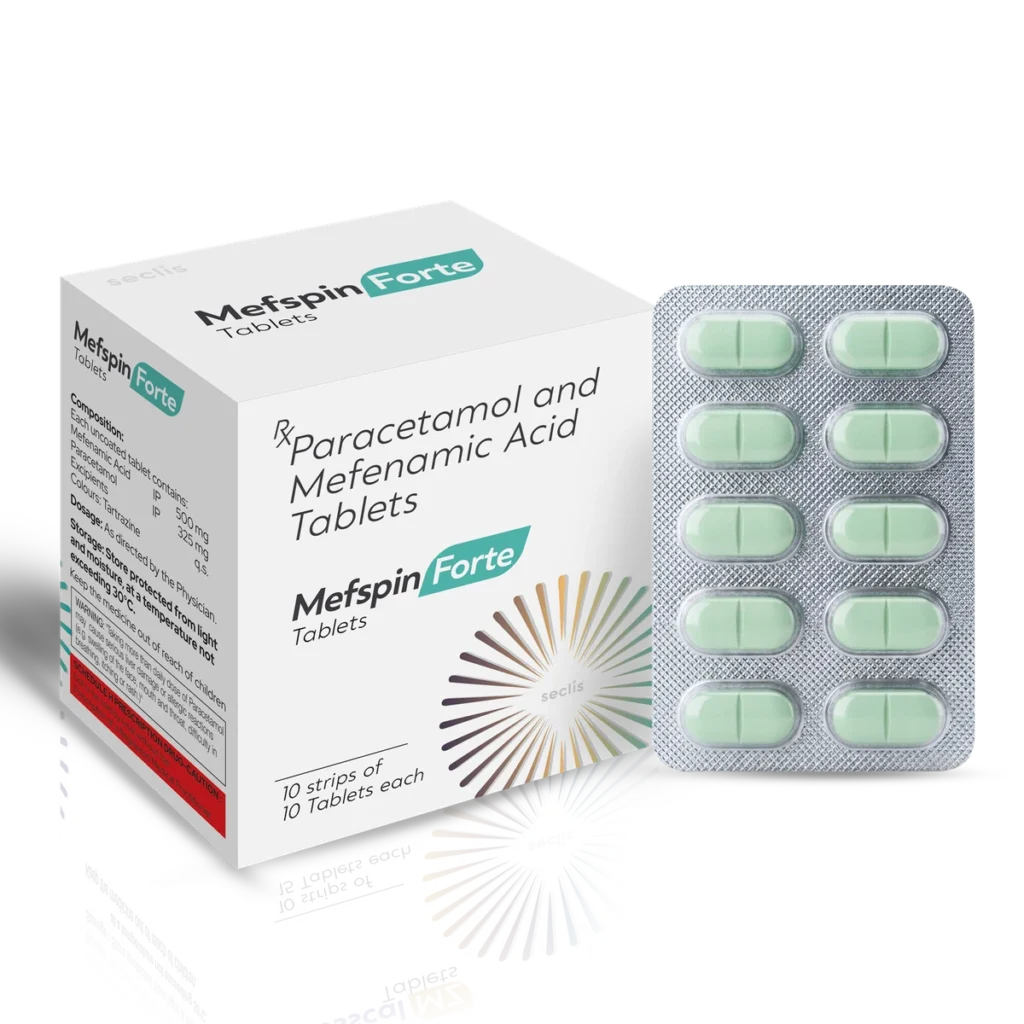
MEFSPIN FORTE
Mefenamic Acid 500mg + Paracetamol 325mg
Quick Facts
Key Benefits
Mechanism of Action
Mefenamic Acid (500mg) is a fenamate NSAID that exerts analgesic, antipyretic, and anti-inflammatory activity through dual inhibition of both COX-1 and COX-2 enzymes, reducing prostaglandin synthesis in peripheral tissues and the CNS. Uniquely among NSAIDs, mefenamic acid also directly antagonises the effects of prostaglandins at receptor level — a dual mechanism (synthesis inhibition + receptor antagonism) that provides superior efficacy in prostaglandin-mediated pain states, particularly primary dysmenorrhoea. Mefenamic acid achieves peak plasma concentrations within 2–4 hours of oral administration, providing relatively rapid analgesic onset.
Paracetamol (325mg) provides central analgesic and antipyretic activity through inhibition of COX-3 (a CNS-specific COX variant) and modulation of the endocannabinoid and serotonergic pain pathways in the spinal cord and brain. Paracetamol's central mechanism is complementary to mefenamic acid's peripheral action — addressing central pain sensitisation while mefenamic acid targets peripheral prostaglandin production.
The combination achieves additive-to-synergistic analgesia through central-peripheral complementarity — allowing adequate pain control at lower individual doses than either drug used alone at maximum dose, with a more favourable GI side-effect profile than high-dose mefenamic acid monotherapy.
Indications
Primary Dysmenorrhoea (Primary Indication — Gynaecology): The most important indication. Mefenamic acid is the NSAID of choice for primary dysmenorrhoea because its dual mechanism (COX inhibition + prostaglandin receptor antagonism) directly targets the prostaglandin-mediated uterine hypermotility responsible for menstrual cramps. Started 2–3 days before expected menstruation and continued for the first 2–3 days of the period, it reduces both pain intensity and menstrual blood loss (secondary benefit).
Dental Pain: Post-extraction pain and acute dental abscess pain — the combination of peripheral anti-inflammatory (mefenamic acid) and central analgesia (paracetamol) provides effective multi-mechanism dental pain relief.
Musculoskeletal Pain: Acute low back pain, myalgia, sports injuries, and mild arthralgia — mefenamic acid's anti-inflammatory activity combined with paracetamol's central analgesia covers both inflammatory and central pain components.
Post-Operative Pain: Mild-to-moderate post-procedural pain management — the combination provides more effective analgesia than either agent alone at standard doses.
Fever with Pain: Dual antipyretic (both agents) + analgesic formulation for febrile illnesses with associated body aches and headache.
Headache and Migraine: Mefenamic acid has established efficacy in tension headache and migraine — the paracetamol component provides complementary analgesia.
Dosage & Administration
Dosage and administration should be as prescribed by a qualified doctor or medical professional. Do not self-medicate. Always follow your physician's instructions regarding dose, frequency and duration of treatment.
Why MEFSPIN FORTE?
Primary dysmenorrhoea affects approximately 50–80% of menstruating women globally, with 5–15% experiencing severe, disabling pain. Mefenamic acid's dual mechanism — reducing prostaglandin synthesis AND blocking prostaglandin receptors — makes it pharmacologically superior to standard NSAIDs (which only inhibit synthesis) for dysmenorrhoea management. The paracetamol combination provides additive central analgesia that extends efficacy into the central pain sensitisation component of severe dysmenorrhoea. MEFSPIN FORTE's broad multi-speciality indication profile (gynaecology, dentistry, orthopaedics, general practice) ensures consistent high-volume prescribing across the Seclis Labs franchise network.