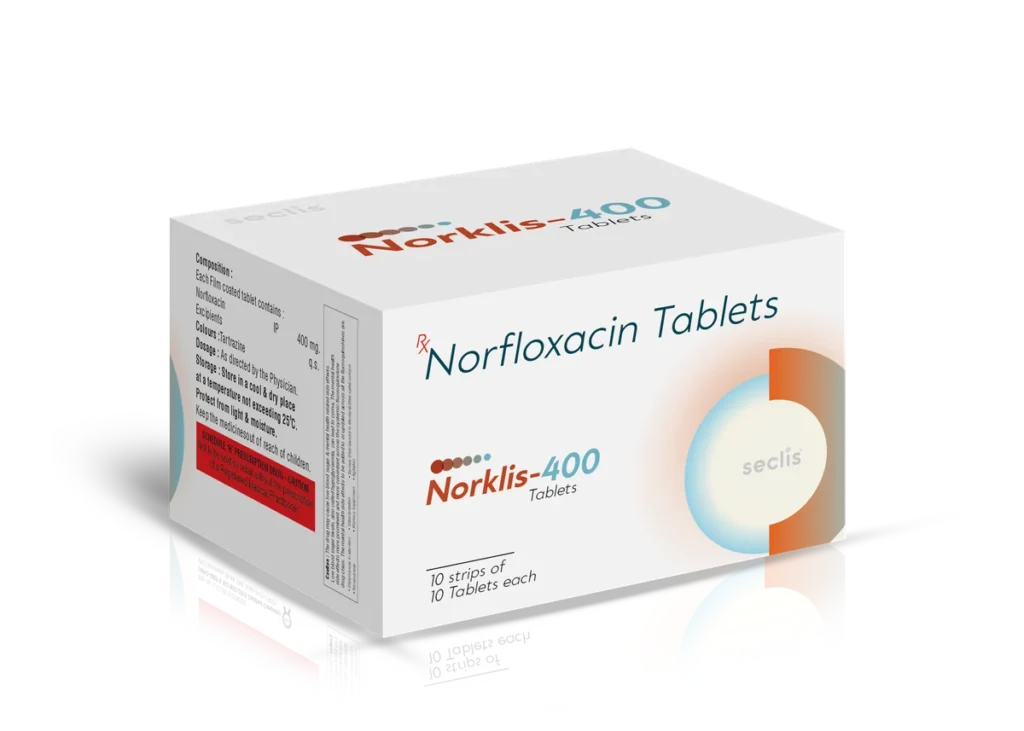
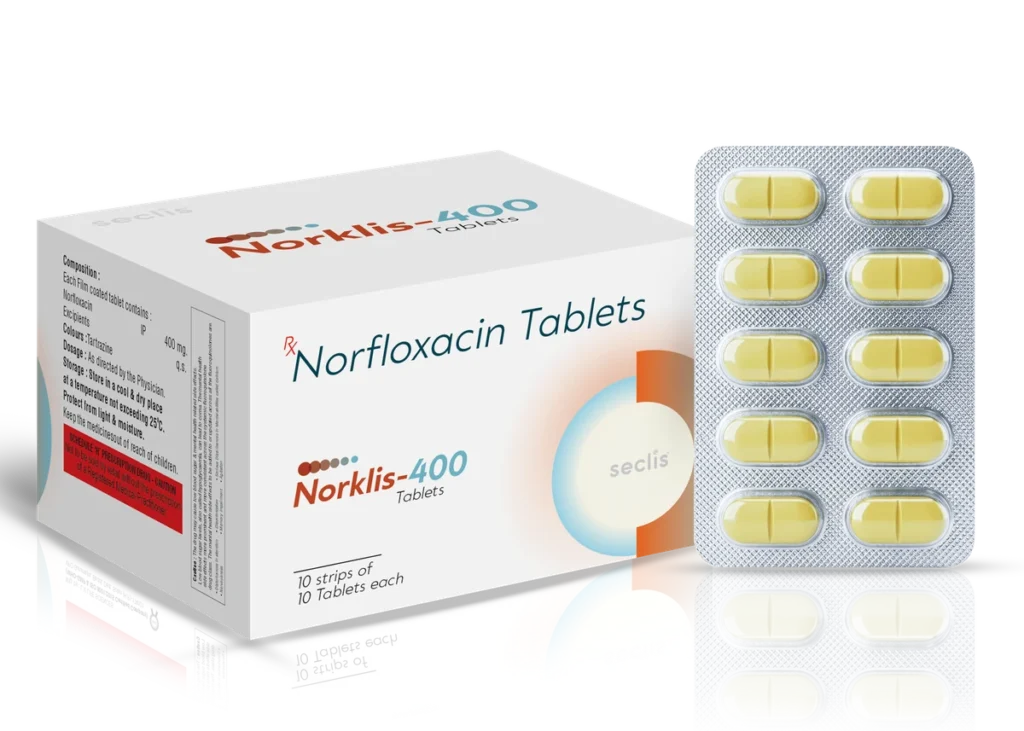
NORKLIS 400
Norfloxacin 400mg
Quick Facts
Key Benefits
Mechanism of Action
Norfloxacin is a first-generation fluoroquinolone antibiotic with predominantly urinary and gastrointestinal tissue distribution. Like all fluoroquinolones, it inhibits DNA gyrase (topoisomerase II) and topoisomerase IV, causing lethal double-strand DNA breaks in susceptible bacteria.
Norfloxacin's pharmacokinetic profile is characterised by selective concentration in the urinary tract and gastrointestinal mucosa with relatively low systemic tissue distribution compared to second and third-generation fluoroquinolones. Oral bioavailability is approximately 30–40% — substantially lower than ciprofloxacin or levofloxacin — with the majority of an oral dose excreted unchanged in urine (achieving high urine concentrations of 200–800 mg/L) and faeces. This selective tissue distribution concentrates norfloxacin's antibacterial activity in the very compartments where it is most clinically relevant: the urinary tract for UTIs and the GI lumen for enteric infections.
Norfloxacin covers gram-negative aerobes including E. coli, Klebsiella, Proteus, Enterobacter, Pseudomonas aeruginosa, and Neisseria gonorrhoeae, plus gram-positive Staphylococcus aureus (MSSA). Its activity against anaerobes and atypical organisms is limited — a spectrum appropriate for its primary urinary and GI indications where these organisms are not typically encountered.
Indications
Urinary Tract Infections (Primary): Uncomplicated and complicated UTIs caused by susceptible E. coli, Klebsiella, and Proteus — norfloxacin achieves urine concentrations 200–800 mg/L, far exceeding the MIC for susceptible uropathogens. Prostatitis (400mg twice daily for 28 days) — norfloxacin penetrates prostate tissue reasonably well. Uncomplicated gonorrhoea (800mg single dose).
Gastrointestinal Infections: Traveller's diarrhoea, Shigellosis, Salmonella-mediated gastroenteritis, and bacterial enteritis caused by susceptible gram-negative organisms. Norfloxacin's high faecal concentrations from the unabsorbed oral fraction provide local intraluminal activity against enteric pathogens.
Hepatic Encephalopathy Prophylaxis: Norfloxacin 400mg twice daily for selective gut decontamination to prevent bacterial translocation and recurrent HE in cirrhotic patients — a guideline-endorsed use where norfloxacin's poor systemic absorption provides intraluminal activity with minimal systemic antibiotic effects.
Spontaneous Bacterial Peritonitis (SBP) Prophylaxis: In cirrhotic patients with low ascitic fluid protein or prior SBP episodes, norfloxacin 400mg once daily is guideline-recommended for SBP prevention.
Dosage & Administration
Dosage and administration should be as prescribed by a qualified doctor or medical professional. Do not self-medicate. Always follow your physician's instructions regarding dose, frequency and duration of treatment.
Why NORKLIS 400?
Norfloxacin's specific niche in hepatology — SBP prophylaxis and hepatic encephalopathy gut decontamination — gives it a distinct clinical identity separate from other fluoroquinolones. For hepatologists managing cirrhotic patients with ascites, norfloxacin is one of the few antibiotics where the pharmacokinetic limitation of poor systemic absorption becomes a clinical advantage: the high faecal concentrations eliminate pathogenic gram-negative bacteria from the gut lumen (reducing translocation risk) without the systemic antibiotic pressure that drives resistance in other organ systems.
NORKLIS 400 in its GI segment placement reflects this hepatology utility — sitting alongside the gastrointestinal portfolio products that gastroenterologists and hepatologists prescribe from the same consultation.