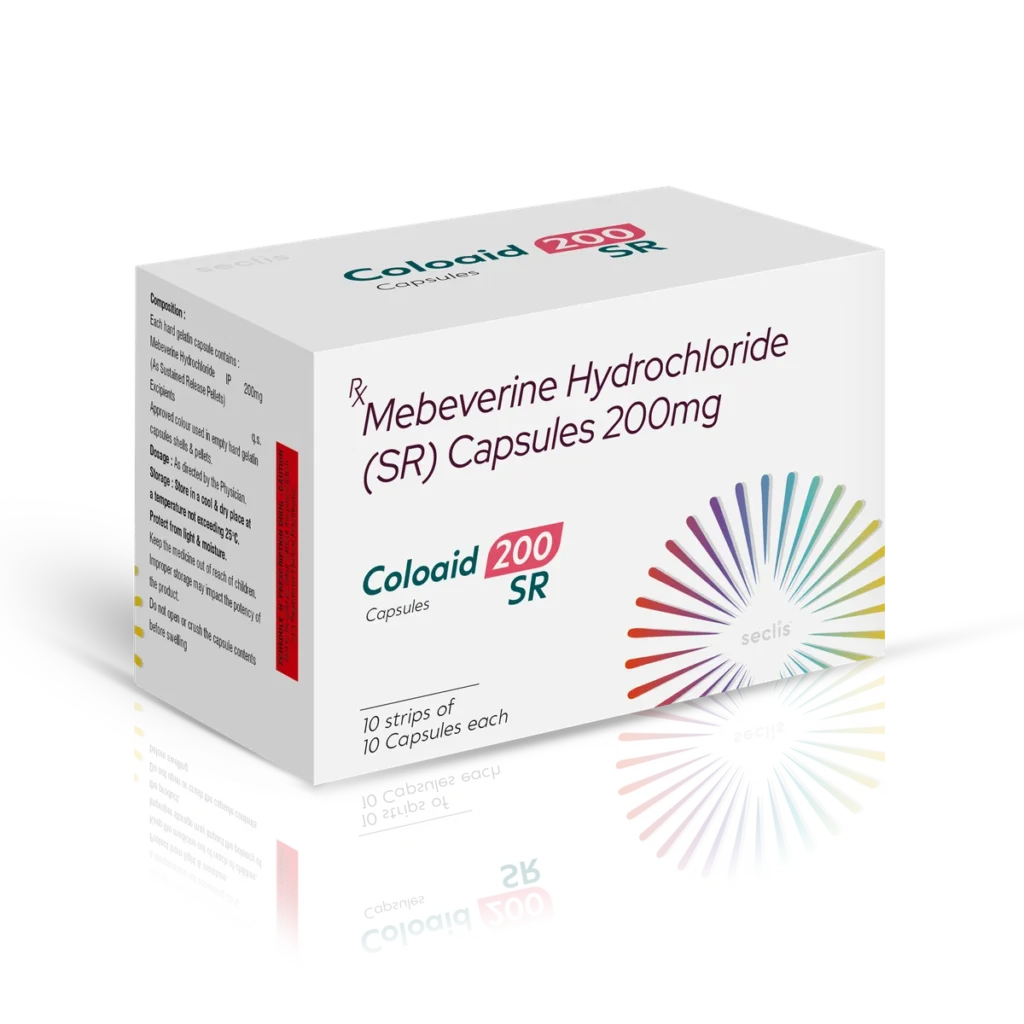
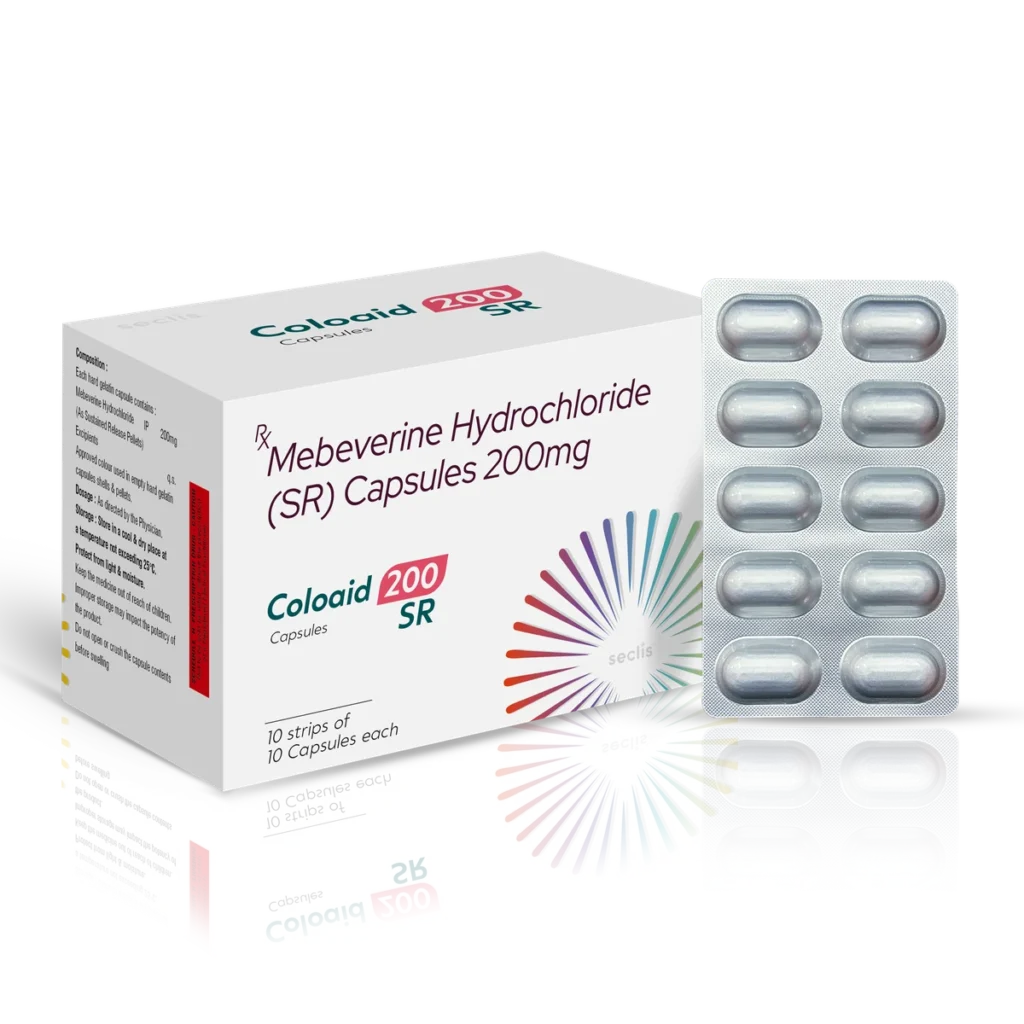
COLOAID 200 SR
Mebeverine Hydrochloride 200mg SR
Quick Facts
Key Benefits
Mechanism of Action
Mebeverine is a musculotropic antispasmodic that acts directly on intestinal smooth muscle to relieve gastrointestinal spasm. Unlike anticholinergic antispasmodics (dicyclomine, hyoscine) which block muscarinic acetylcholine receptors and cause systemic anticholinergic effects (dry mouth, urinary retention, blurred vision, constipation), mebeverine acts at the smooth muscle cell itself through a direct, receptor-independent mechanism.
Mebeverine blocks fast sodium channels in intestinal smooth muscle cell membranes, preventing the sodium ion influx that drives action potential initiation and propagation. Without action potential transmission, smooth muscle contraction cannot occur — relieving intestinal spasm. Additionally, mebeverine reduces abnormal calcium ion flux through L-type calcium channels in smooth muscle, further reducing contractile tone. This dual ion channel modulation produces selective relaxation of spastic intestinal smooth muscle without affecting normal peristaltic contractions — an important distinction from anticholinergics that impair all intestinal motility including normal propulsive peristalsis.
The 200mg Sustained Release (SR) formulation releases mebeverine gradually over 8–12 hours, maintaining steady-state plasma concentrations that provide continuous IBS symptom control throughout the day with a convenient twice-daily dosing regimen — superior to immediate-release formulations that require three times daily administration.
Indications
COLOAID 200 SR is specifically indicated for irritable bowel syndrome (IBS) and functional bowel disorders characterised by colonic spasm, abdominal pain, and altered bowel habit.
Irritable Bowel Syndrome (Primary Indication): Abdominal cramping, colonic spasm, bloating, and altered bowel habit in IBS — the primary approved indication for mebeverine. Mebeverine directly addresses the abnormal smooth muscle hypermotility responsible for IBS pain without the constipating side effects of anticholinergics. Suitable for all IBS subtypes (IBS-D, IBS-C, IBS-M) as it normalises rather than impairs motility.
Functional Abdominal Pain: Non-IBS functional bowel pain associated with intestinal spasm — particularly post-meal cramping (post-prandial abdominal pain syndrome) and pain related to gas/bloating.
Diverticular Disease: Colonic spasm associated with diverticulosis and diverticulitis — mebeverine reduces symptomatic spasm without impairing colonic motility.
Chronic Bowel Disorders: Crohn's disease and ulcerative colitis — mebeverine as an adjunct antispasmodic to reduce cramping pain without interfering with disease-specific therapy.
Post-Infective IBS: IBS developing after acute gastroenteritis (post-infectious IBS) — highly responsive to antispasmodic therapy.
Dosage & Administration
Dosage and administration should be as prescribed by a qualified doctor or medical professional. Do not self-medicate. Always follow your physician's instructions regarding dose, frequency and duration of treatment.
Why COLOAID 200 SR?
Irritable bowel syndrome affects approximately 15–20% of the global population — making it one of the most prevalent gastrointestinal disorders in outpatient practice. In India, IBS prevalence is estimated at 4–7% but is substantially underdiagnosed, representing a large and growing prescribing opportunity.
Mebeverine's specific advantage over the older anticholinergic antispasmodics (dicyclomine, hyoscine) that dominate the Indian antispasmodic market is its freedom from anticholinergic side effects — a significant tolerability advantage for elderly patients, men with BPH, and patients taking other anticholinergic medications. European IBS management guidelines explicitly prefer musculotropic antispasmodics over anticholinergics based on this superior tolerability profile.
COLOAID 200 SR's twice-daily SR dosing is a practical differentiator in the Indian market where immediate-release mebeverine three times daily is the standard formulation — better compliance with twice-daily dosing translates directly to better IBS symptom control and patient satisfaction.