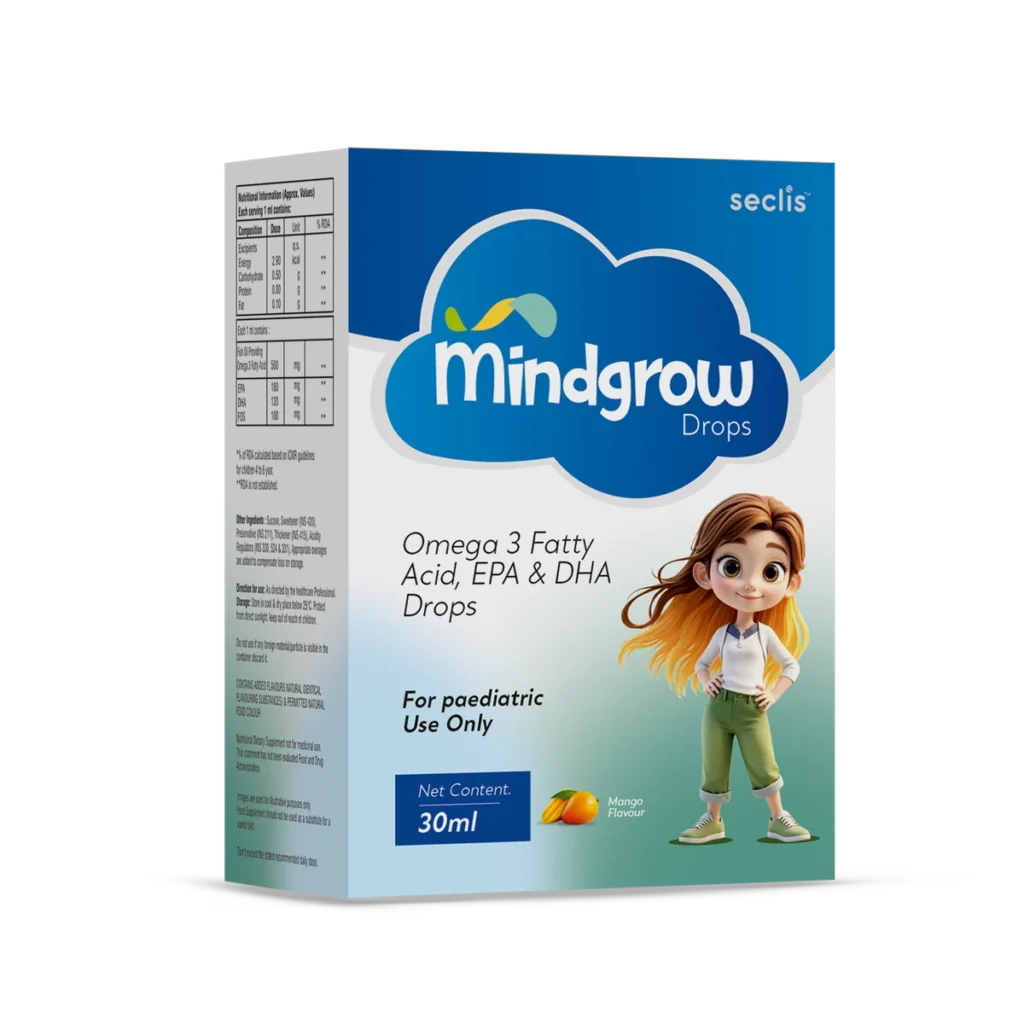
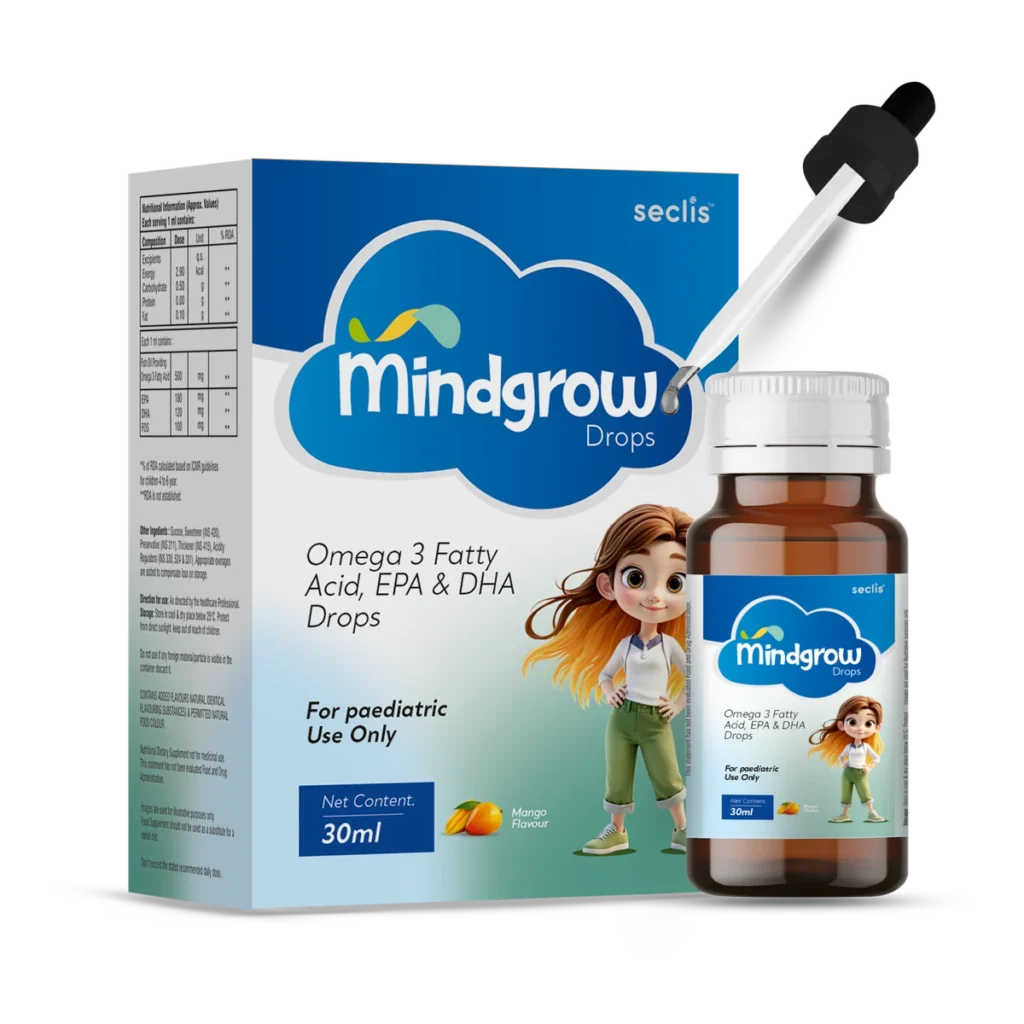
MINDGROW
FISH OIL PROVIDING OMEGA3 FATTY ACID---500MG EPA---180 MG DHA-----120 MG FOS---100MG (MANGO FLAVOUR)
Quick Facts
Key Benefits
Mechanism of Action
Fish oil (Omega-3 fatty acids EPA and DHA) provides long-chain polyunsaturated fatty acids with multiple systemic mechanisms spanning neurological, cardiovascular, inflammatory, and visual function.
EPA (Eicosapentaenoic Acid) serves as the primary substrate for the synthesis of Series-3 prostaglandins, Series-5 leukotrienes, and resolvins/protectins — lipid mediators with anti-inflammatory, pro-resolution, and immunomodulatory properties that counterbalance the pro-inflammatory Series-2 prostaglandins and Series-4 leukotrienes derived from the competing omega-6 fatty acid arachidonic acid. By shifting the fatty acid balance in favour of EPA, fish oil supplementation reduces systemic inflammation and is particularly important for cardiovascular protection and autoimmune condition management.
DHA (Docosahexaenoic Acid) is the dominant structural omega-3 fatty acid in the brain and retina. It constitutes approximately 40% of total fatty acids in the cerebral cortex synaptic membranes and 60% of total fatty acids in the retinal photoreceptor outer segment membranes. DHA is essential for: neuronal membrane fluidity and signal transduction efficiency, synaptic vesicle function (neurotransmitter release), retinal photoreceptor function (rhodopsin activation), and myelination during brain development.
In the drops format for paediatric and infant use, DHA supplementation during the critical neurodevelopmental window (0–3 years) supports optimal brain development, visual acuity maturation, and cognitive function development.
Indications
Neurodevelopmental Support in Infants and Children (Primary): DHA supplementation during the critical neurodevelopmental window for brain and visual development. Preterm infants (whose DHA stores are depleted through premature birth and who miss the third trimester DHA transfer) have the most urgent need. Term infants not receiving DHA-fortified formula or breast milk from DHA-supplemented mothers benefit from direct supplementation.
Pregnancy and Lactation: Maternal DHA supplementation ensures adequate DHA transfer to the developing foetal brain and retina, and high breast milk DHA concentration for breastfed infants. Recommended by ISSFAL, WHO, and Indian dietary guidelines for pregnant and lactating women.
Retinal Function: DHA's structural role in photoreceptor membranes makes fish oil supplementation relevant for retinal dystrophies, age-related macular degeneration, and dry eye disease.
Anti-Inflammatory Conditions: EPA's anti-inflammatory prostaglandin profile makes fish oil an evidence-based adjunct in rheumatoid arthritis, inflammatory bowel disease, and psoriasis.
Cardiovascular Protection: EPA + DHA reduce serum triglycerides, modestly lower blood pressure, reduce platelet aggregation, and improve endothelial function — established cardiovascular risk reduction effects.
Dosage & Administration
Dosage and administration should be as prescribed by a qualified doctor or medical professional. Do not self-medicate. Always follow your physician's instructions regarding dose, frequency and duration of treatment.
Why MINDGROW?
India's omega-3 dietary deficit is significant — the typical Indian diet (predominantly vegetarian with limited marine fish consumption) is severely deficient in preformed EPA and DHA. Plant-based ALA (from flaxseed, walnuts) is inadequately converted to EPA and DHA in humans (less than 5% conversion efficiency). This dietary gap is most consequential during foetal development and the first 3 years of life when DHA is critically needed for optimal brain and retinal development. MINDGROW drops fills this gap through direct EPA + DHA supplementation in a format specifically designed for infant and paediatric administration.