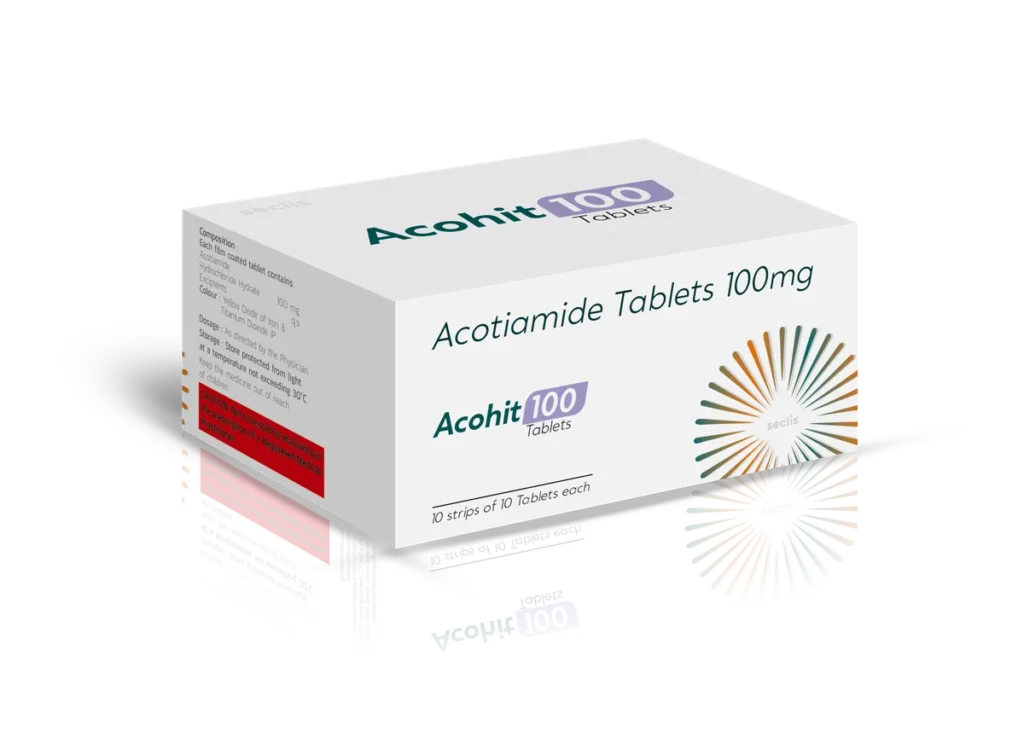
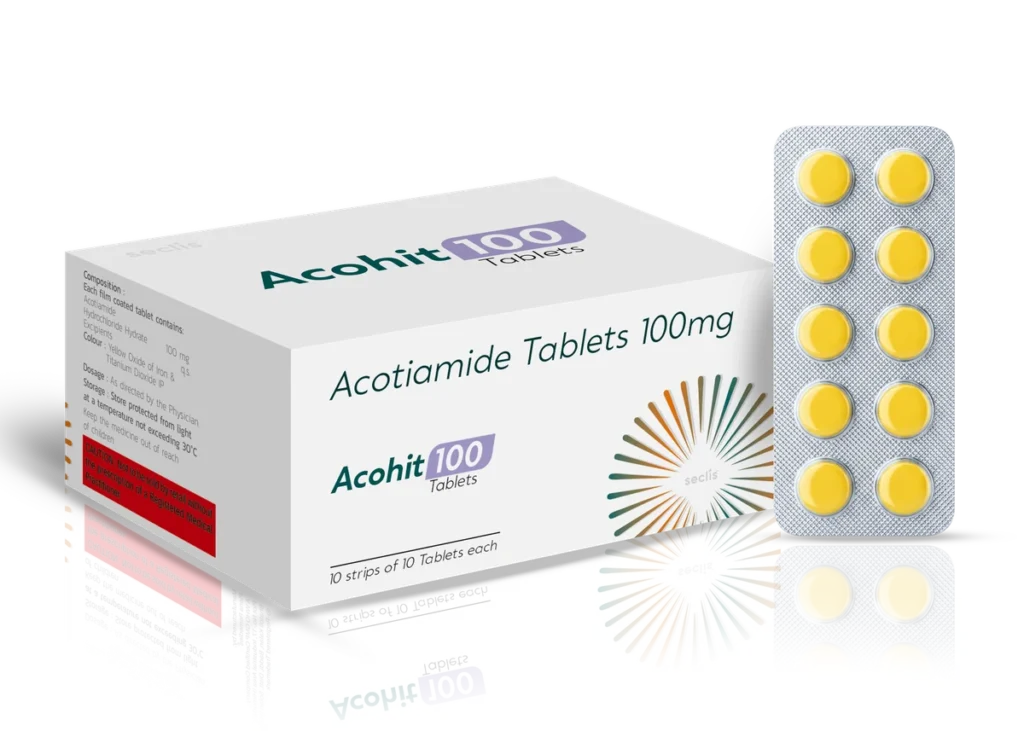
ACOHIT 100
Acotiamide 100mg
Quick Facts
Key Benefits
Mechanism of Action
Acotiamide is a novel, first-in-class prokinetic agent with a dual mechanism that distinguishes it from all other currently available prokinetics — it is simultaneously an acetylcholinesterase (AChE) inhibitor AND a selective muscarinic M1/M2 receptor antagonist, producing prokinetic gastric motility enhancement through a fundamentally different pathway than dopamine antagonist prokinetics (domperidone, levosulpiride, metoclopramide).
Acetylcholinesterase Inhibition: Acotiamide inhibits AChE in the myenteric plexus, preventing the enzymatic breakdown of endogenous acetylcholine at the neuromuscular junction. This increases the concentration of acetylcholine available to stimulate muscarinic M3 receptors on gastric smooth muscle and the lower oesophageal sphincter, enhancing gastric antral contractions, improving antroduodenal coordination, and accelerating gastric emptying.
Selective M1/M2 Receptor Antagonism: Simultaneously, acotiamide blocks M1 and M2 muscarinic receptors — which are presynaptic autoreceptors on cholinergic nerve terminals that normally provide negative feedback inhibition of acetylcholine release. By blocking these inhibitory receptors, acotiamide disinhibits acetylcholine release from myenteric neurons, amplifying the cholinergic drive to gastric smooth muscle and further enhancing prokinetic activity.
This dual mechanism — increasing both the amount of acetylcholine released (M1/M2 antagonism) AND reducing its degradation (AChE inhibition) — produces a synergistic cholinergic enhancement that is more potent and more sustained than either mechanism alone. Importantly, acotiamide does not have dopamine receptor blocking activity, eliminating the QT prolongation, extrapyramidal effects, and prolactin elevation concerns of dopaminergic prokinetics.
Acotiamide's selectivity for the upper GI tract (gastric fundus, antrum, and pylorus) versus the lower GI tract ensures that its prokinetic enhancement is targeted to the gastric motility dysfunction characteristic of functional dyspepsia, without disturbing colonic motility patterns.
Indications
Acotiamide is the only prokinetic specifically developed and clinically validated for functional dyspepsia — an indication that distinguishes it from domperidone and levosulpiride, which were developed for nausea/vomiting (domperidone) and psychiatric indications (levosulpiride) and later repurposed as prokinetics.
Functional Dyspepsia — Post-Prandial Distress Syndrome (Primary Indication): The precise and validated indication — acotiamide is approved specifically for functional dyspepsia with post-prandial symptoms (bloating, early satiety, upper abdominal fullness after meals) caused by impaired gastric accommodation and delayed gastric emptying. Multiple Phase III RCTs specifically in functional dyspepsia populations demonstrate statistically significant symptom improvement with acotiamide 100mg three times daily versus placebo — evidence that no other prokinetic possesses specifically in functional dyspepsia populations.
Gastroparesis: Delayed gastric emptying from any cause (diabetic, post-surgical, idiopathic) — acotiamide's cholinergic enhancement directly addresses the reduced antral contractility and impaired antroduodenal coordination responsible for gastroparesis.
GORD with Impaired Gastric Emptying: As an adjunct to PPI therapy in GORD patients where delayed gastric emptying perpetuates reflux despite adequate acid suppression — acotiamide's upper GI selectivity makes it a precise pharmacological tool for this combination.
Non-Ulcer Dyspepsia: Functional epigastric symptoms without structural pathology where motility-driven symptoms predominate over acid-driven symptoms.
Dosage & Administration
Dosage and administration should be as prescribed by a qualified doctor or medical professional. Do not self-medicate. Always follow your physician's instructions regarding dose, frequency and duration of treatment.
Why ACOHIT 100?
Functional dyspepsia affects approximately 10–15% of the global population and is one of the most common gastroenterology referral diagnoses — yet until acotiamide, no prokinetic had been specifically developed and validated in this population. Domperidone and levosulpiride, while effective prokinetics, were repurposed from their original indications and lack the functional dyspepsia-specific RCT evidence that acotiamide possesses.
The absence of dopaminergic activity is acotiamide's critical safety differentiator. Domperidone is subject to regulatory restrictions in multiple countries due to cardiac QT prolongation risk; levosulpiride causes prolactin elevation. Acotiamide's cholinergic mechanism bypasses both concerns entirely — enabling long-term prescribing for the chronic condition of functional dyspepsia without the cardiac or hormonal monitoring requirements of dopaminergic agents.
For gastroenterologists who see large volumes of functional dyspepsia patients — a condition notoriously difficult to manage satisfactorily with existing therapies — ACOHIT 100 provides a scientifically differentiated prokinetic with the strongest clinical evidence specifically in their patient population. The premium MRP of ₹1980 reflects both the research investment in functional dyspepsia-specific development and the clinical value of a safer, more targeted prokinetic.