D-VIEW 60K
Vitamin D3 60000 iu Oral Solution (BUTTERSCOTCH FLAVOR)
Quick Facts
Key Benefits
Mechanism of Action
Vitamin D3 (Cholecalciferol) 60,000 IU oral solution provides a high-dose weekly or biweekly supplementation format for correcting vitamin D deficiency — the most prevalent nutritional deficiency in India, affecting an estimated 70–90% of the population across all demographic groups.
Cholecalciferol (D3) is the natural form of vitamin D synthesised in the skin upon UV-B radiation exposure. After oral absorption, D3 undergoes two sequential hydroxylation steps: first in the liver (producing 25-hydroxyvitamin D — calcidiol, the measurable storage form) and then in the kidney (producing 1,25-dihydroxyvitamin D — calcitriol, the active hormonal form). Calcitriol exerts its biological effects by binding to the Vitamin D Receptor (VDR) — a nuclear receptor present in virtually every cell type in the body, reflecting vitamin D's systemic hormonal role beyond its classical calcium-phosphorus metabolism functions.
Classical Functions of Calcitriol: Stimulates intestinal calcium and phosphorus absorption (increasing calcium absorption from 10–15% to 30–40%), enhances renal calcium reabsorption, stimulates osteoclast-mediated bone resorption (for calcium mobilisation), and promotes osteoblast activity — maintaining bone mineral density and preventing rickets (children) and osteomalacia/osteoporosis (adults).
Non-Classical Functions (now well-established): Immunomodulation (VDR signalling in T-cells, B-cells, and macrophages reduces autoimmune activity and enhances anti-infective immunity), cardiovascular protection (reduces renin expression, lowers blood pressure), insulin secretion (VDR in pancreatic beta-cells), muscle function (reduced falls and improved grip strength), and anti-cancer effects (cell cycle regulation, apoptosis induction).
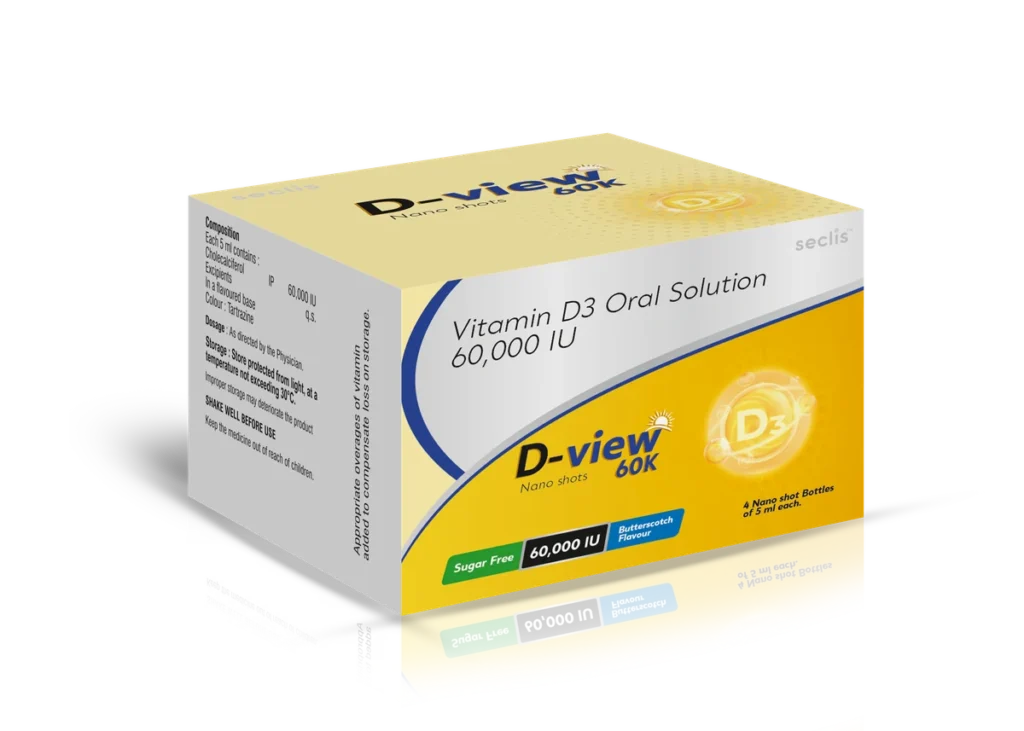
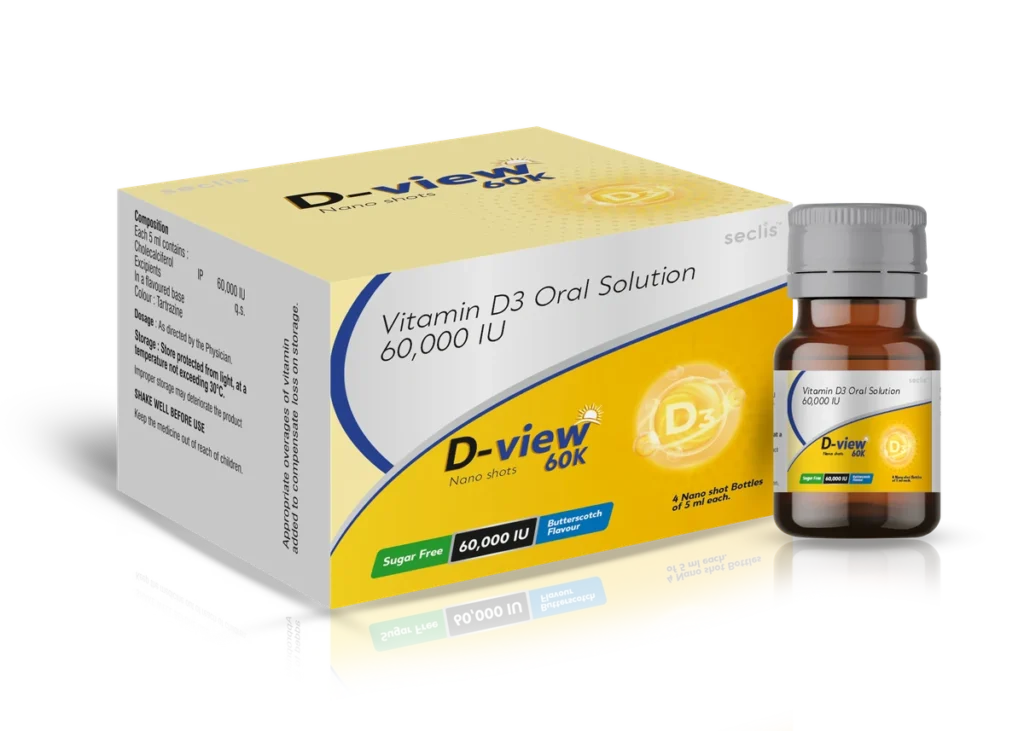
At 60,000 IU per 5mL nano shot, D-VIEW 60K provides the standard weekly high-dose loading protocol used across India for rapid correction of vitamin D deficiency — a single 5mL dose (60,000 IU) taken weekly for 8 weeks, followed by monthly maintenance.
Indications
Vitamin D Deficiency Correction (Primary): Serum 25-OH vitamin D below 20 ng/mL — the most common nutritional deficiency diagnosis in India. The 60,000 IU weekly dose protocol achieves deficiency correction in 8 weeks (target >30 ng/mL) with high patient compliance from the once-weekly regimen.
Rickets Prevention and Treatment: Vitamin D-deficiency rickets in children — high-dose D3 is the treatment of choice alongside calcium supplementation.
Osteoporosis and Osteopenia: Adjunct to bisphosphonate or other anti-resorptive therapy — vitamin D sufficiency is essential for bisphosphonate efficacy (adequate calcium absorption requires normal D3 status).
Post-Menopausal Women: Fracture prevention through bone density maintenance — vitamin D + calcium is the foundational intervention.
Pregnancy and Lactation: Prevention of maternal vitamin D deficiency and foetal/infant bone development — gynecologists routinely prescribe D3 60,000 IU weekly in the second and third trimester.
Immune System Support: Vitamin D's immunomodulatory function makes supplementation relevant for recurrent respiratory infections, autoimmune conditions, and general immune health — supported by growing evidence in infectious disease management.
Chronic Disease Associations: Type 2 diabetes risk reduction, hypertension management, and depression — emerging evidence supporting vitamin D optimisation in metabolic syndrome management.
Dosage & Administration
Dosage and administration should be as prescribed by a qualified doctor or medical professional. Do not self-medicate. Always follow your physician's instructions regarding dose, frequency and duration of treatment.
Why D-VIEW 60K?
India's vitamin D deficiency epidemic is paradoxical — despite abundant sunshine, 70–90% of Indians are vitamin D deficient. The paradox is explained by cultural practices (skin coverage, sun avoidance), urban lifestyle (indoor occupations), high skin melanin (reducing UV-B conversion efficiency), and the primarily vegetarian diet providing minimal dietary vitamin D.
The clinical consequences are vast — vitamin D deficiency contributes to bone disease, immune dysfunction, cardiovascular risk, and insulin resistance at the population level. The 60,000 IU weekly protocol has emerged as the standard Indian clinical practice for deficiency correction because of its practical compliance advantages: patients reliably take a once-weekly dose; healthcare providers can confirm compliance (4 shots = 1 confirmed month); and the high per-dose amount achieves therapeutic serum levels within 8 weeks.
D-VIEW 60K's nano shot format (compact 5mL versus older 10–15mL formulations) and butterscotch flavouring address the two main compliance barriers of high-dose D3 oral solutions — the oily taste and the inconvenient volume. For orthopedicians, gynecologists, and endocrinologists who write thousands of D3 prescriptions annually, D-VIEW 60K's practical format and 2-year expiry make it the preferred product within Seclis Labs' Nutritional segment.