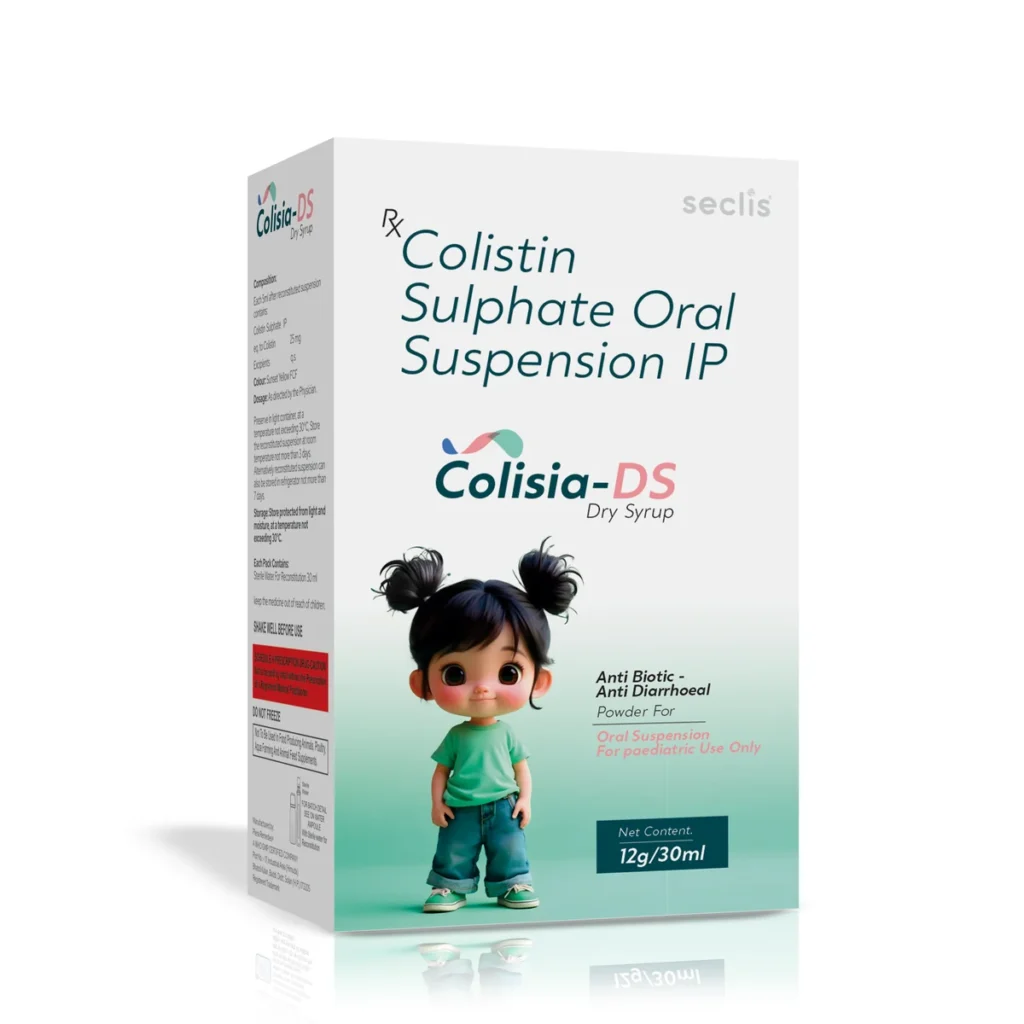
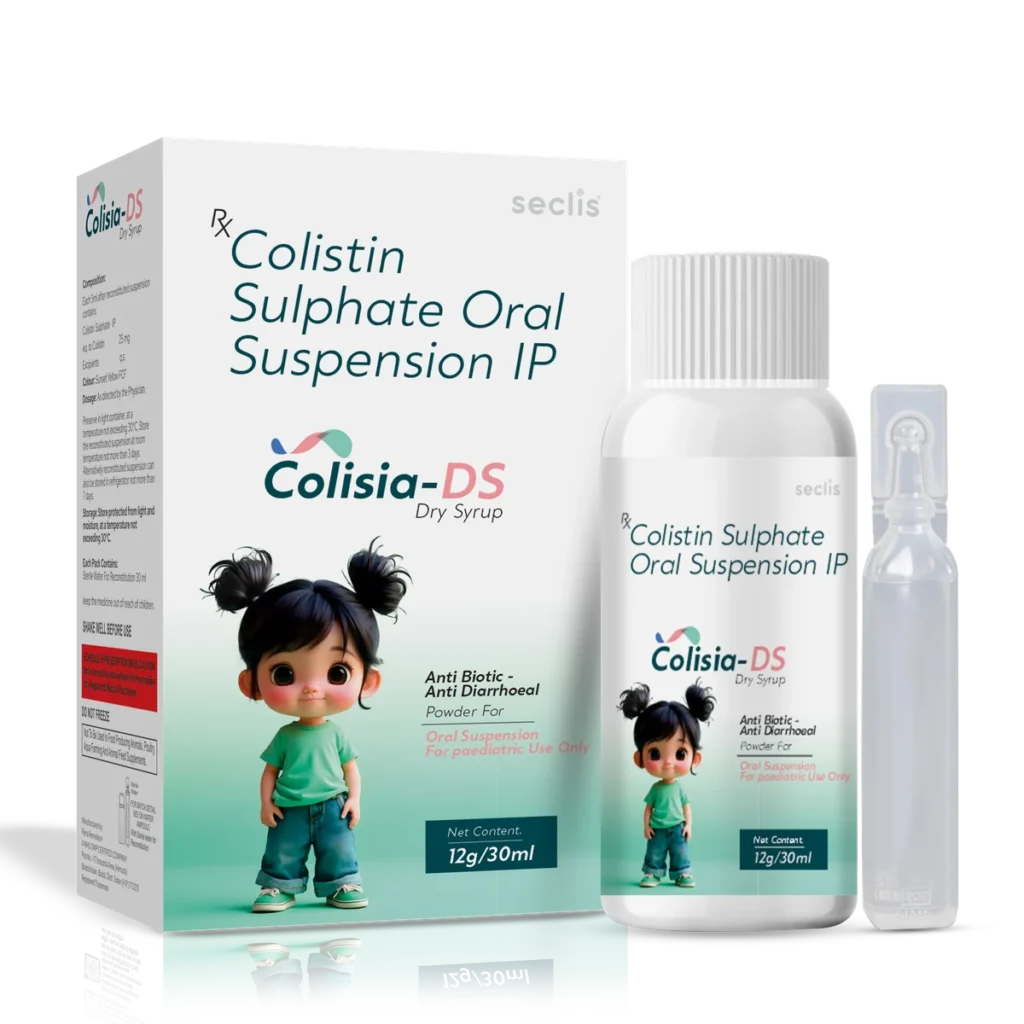
COLISIA DS
COLISTIN SULPHATE ORAL SUSP.IP 25 MG/5ML
Quick Facts
Key Benefits
Mechanism of Action
Colistin (polymyxin E) is a polypeptide antibiotic belonging to the polymyxin class — one of the oldest antibiotics rediscovered as a last-resort treatment for multi-drug-resistant gram-negative bacterial infections. In the oral/GI context, colistin sulphate functions as a locally-acting gut decontaminant with negligible systemic absorption.
Colistin's mechanism involves electrostatic interaction between its cationic polypeptide structure and the anionic phosphate groups of lipopolysaccharide (LPS) in the outer membrane of gram-negative bacteria. This interaction displaces the divalent calcium and magnesium ions that normally stabilise the LPS membrane structure, causing disruption of outer membrane integrity. This is followed by insertion of the colistin molecule into the bacterial membrane, creating aqueous pores through which cellular contents leak — causing rapid bacterial cell death through osmotic lysis.
At 25mg per 5mL (the double-strength paediatric formulation), colistin sulphate oral suspension achieves high intraluminal concentrations in the gastrointestinal tract after oral administration, with less than 1% systemic absorption — meaning essentially all antibacterial activity is local within the gut lumen. This gut-selective activity makes oral colistin uniquely suited for selective gut decontamination (SGD) protocols in critically ill patients and for bowel decontamination before colorectal surgery, without the nephrotoxicity and neurotoxicity risks associated with systemic colistin administration.
Indications
COLISIA DS is a reserve antibiotic specifically indicated for gastrointestinal decontamination in settings where gut-selective antibacterial activity against gram-negative organisms is required without systemic antibiotic exposure.
Selective Gut Decontamination (SGD): Prevention of gram-negative bacterial translocation and systemic infection in critically ill paediatric patients — particularly those in ICUs, immunocompromised patients, and haematology patients receiving chemotherapy. Colistin oral suspension eliminates the gram-negative aerobic bacteria that translocate across a compromised gut barrier to cause systemic infections (bacteraemia, sepsis).
Pre-Operative Bowel Decontamination: Oral bowel decontamination before colorectal surgery — reducing the gram-negative bacterial load in the colon to minimise surgical site infections and anastomotic leakage.
Neonatal Necrotising Enterocolitis (NEC) Prophylaxis: In high-risk premature neonates, oral colistin has been used as a prophylactic measure to reduce gram-negative colonisation and NEC risk — a highly specific neonatal ICU indication.
ESBL and Carbapenem-Resistant Organism Gut Decontamination: Elimination of gut carriage of ESBL-producing Enterobacteriaceae and carbapenem-resistant organisms (CROs) in colonised patients — particularly before transplantation or haematopoietic stem cell transplantation.
Traveller's Diarrhoea: In some specialist protocols, oral colistin for diarrhoea caused by enterotoxigenic E. coli where systemic antibiotics are contraindicated.
Dosage & Administration
Dosage and administration should be as prescribed by a qualified doctor or medical professional. Do not self-medicate. Always follow your physician's instructions regarding dose, frequency and duration of treatment.
Why COLISIA DS?
Oral colistin occupies a unique clinical niche — it provides intraluminal antibacterial activity against the most resistant gram-negative organisms (ESBL producers, carbapenem-resistant Klebsiella and Acinetobacter) without any of the systemic toxicity that limits parenteral colistin use. As carbapenem-resistant organism (CRO) colonisation becomes increasingly prevalent in Indian ICUs and high-dependency units, gut decontamination protocols using oral colistin are an increasingly important infection control measure.
The double-strength DS formulation (25mg/5mL versus the standard 12.5mg/5mL COLISIA) provides higher intraluminal colistin concentrations for protocols requiring more aggressive gut decontamination — particularly for CRO decolonisation before haematopoietic stem cell transplantation or solid organ transplantation, where the risk of systemic CRO infection from gut translocation is highest.