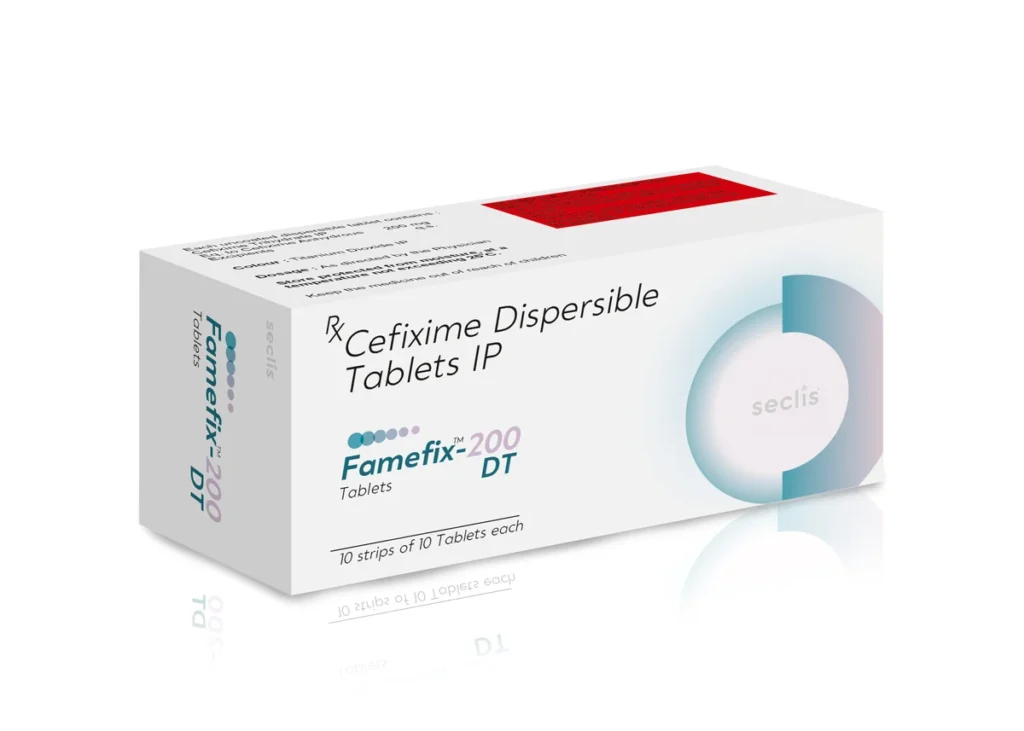
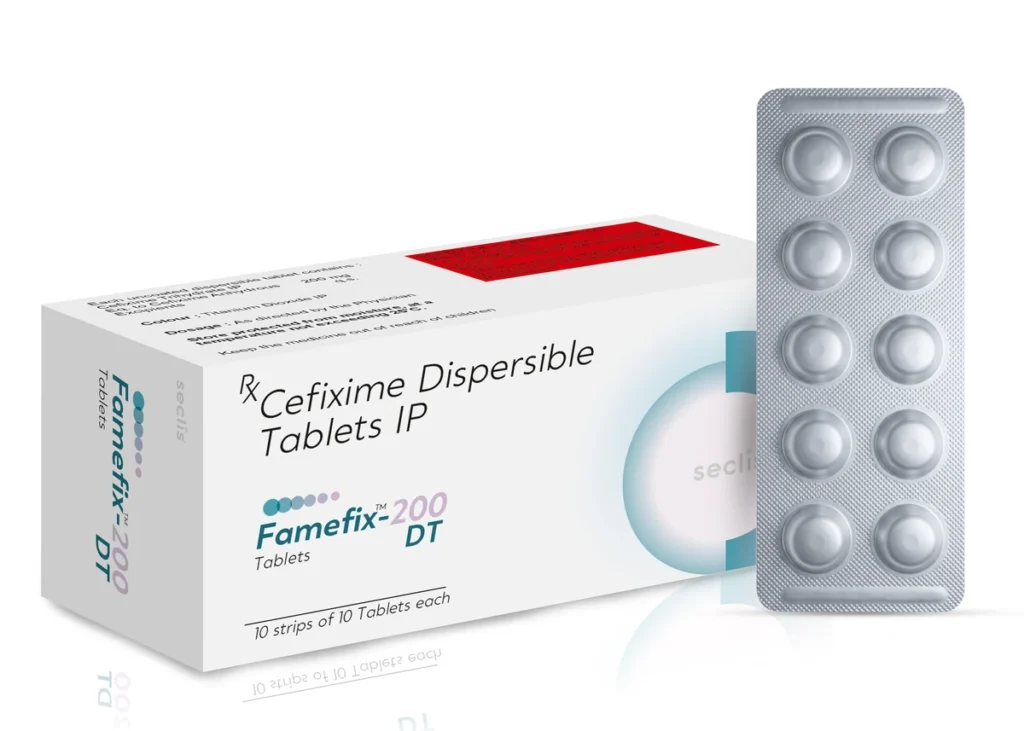
FAMEFIX™ 200 DT
Cefixime I.P. 200 mg Dispersible Tablet
Quick Facts
Key Benefits
Mechanism of Action
Cefixime is a third-generation oral cephalosporin that demonstrates potent bactericidal activity through inhibition of bacterial cell wall synthesis. It acts by binding with high affinity to penicillin-binding proteins (PBPs) — specifically PBP1 and PBP3 — located on the inner membrane of the bacterial cell wall. These proteins are essential enzymes responsible for catalysing the final cross-linking step of peptidoglycan biosynthesis. When cefixime occupies these binding sites, it prevents peptidoglycan cross-linking, causing the cell wall to weaken structurally. This results in osmotic instability, cell lysis, and bacterial death.
Cefixime demonstrates high intrinsic stability against many plasmid-mediated and chromosomally encoded beta-lactamase enzymes produced by gram-negative bacteria, including those produced by H. influenzae and M. catarrhalis. This stability, combined with its excellent oral bioavailability (approximately 40–50%) and once or twice-daily dosing, makes cefixime a first-choice oral cephalosporin in both adult and paediatric practice.
The dispersible tablet formulation dissolves rapidly in water, producing a uniform suspension that is easy to administer — particularly important in paediatric patients, the elderly, and adults with swallowing difficulties.
Indications
FAMEFIX™ 200 DT is indicated across a broad range of bacterial infections, with particular utility in paediatric, gynaecological, and ENT practice.
Paediatric Infections: Acute otitis media, pharyngitis, tonsillitis, and acute sinusitis in children above 6 months.
Urinary Tract Infections: Uncomplicated UTIs in children and adults caused by E. coli, Proteus mirabilis, and Klebsiella pneumoniae.
Gynaecological Infections: Uncomplicated gonorrhoea, cervicitis, and pelvic inflammatory disease as part of combination therapy.
Respiratory Tract Infections: Acute exacerbations of chronic bronchitis and community-acquired pneumonia involving H. influenzae or S. pneumoniae.
ENT Infections: Acute bacterial sinusitis, acute otitis media, and pharyngitis where cefixime's penetration into ENT tissues provides reliable clinical outcomes.
Enteric Fever: Typhoid and paratyphoid fever, where cefixime has demonstrated clinical efficacy particularly in paediatric populations.
Dosage & Administration
Dosage and administration should be as prescribed by a qualified doctor or medical professional. Do not self-medicate. Always follow your physician's instructions regarding dose, frequency and duration of treatment.
Why FAMEFIX™ 200 DT?
Cefixime 200mg dispersible tablets occupy a critical position in both paediatric and adult outpatient antibiotic prescribing. Acute otitis media — one of the most common reasons for paediatric antibiotic prescriptions globally — is a primary indication where cefixime outperforms amoxycillin in cases involving beta-lactamase-producing organisms. FAMEFIX™ 200 DT's dispersible formulation makes it uniquely practical for this patient population.
For gynaecologists, cefixime remains a WHO-recommended agent for uncomplicated gonorrhoea. The DPCO regulation of this product ensures that despite the clinical premium of a third-generation cephalosporin, patients are not priced out of appropriate therapy. Seclis Labs' WHO-GMP manufacturing ensures that this affordability does not come at the cost of quality.