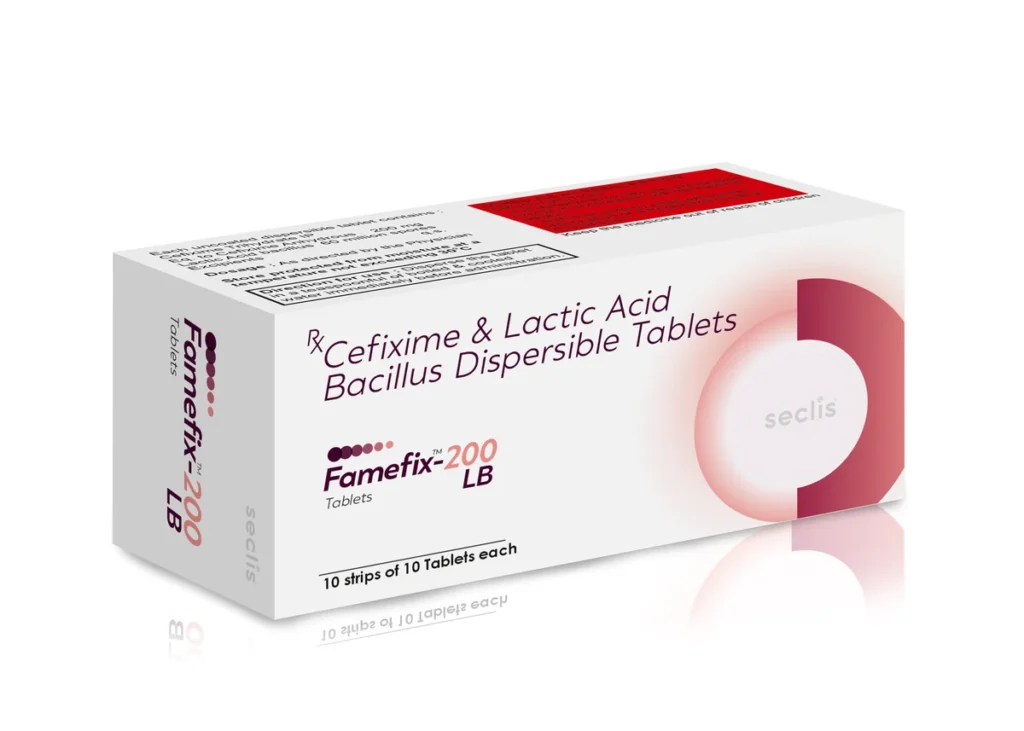
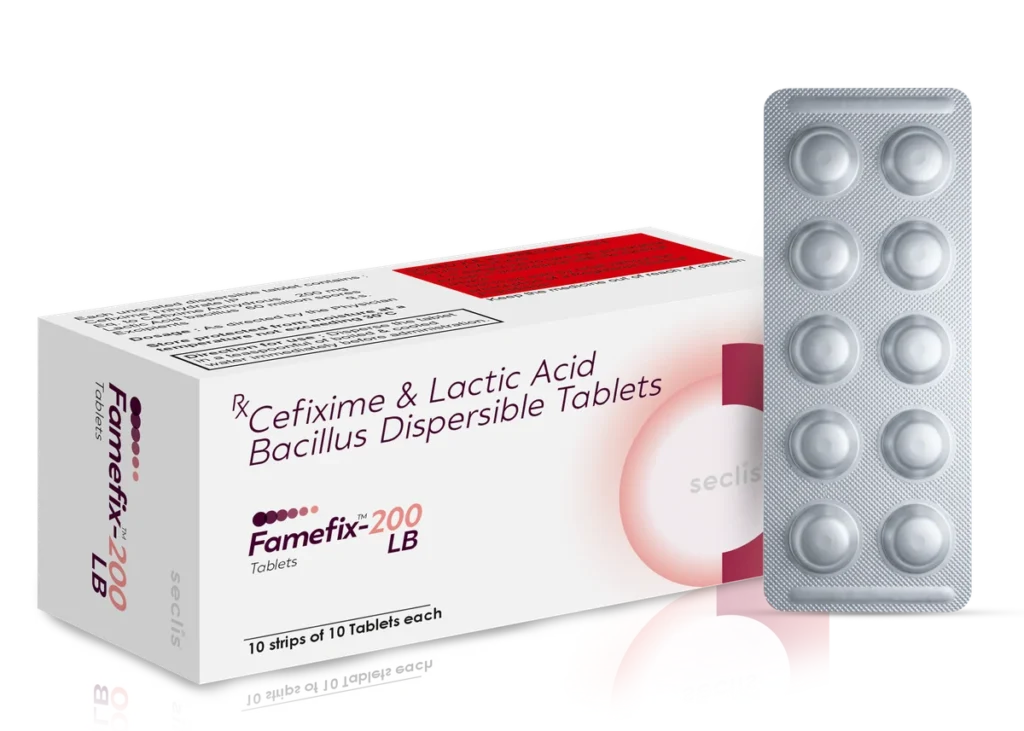
FAMEFIX™ 200 LB
Cefixime 200mg (Lactic Acid Bacillus D.T.)
Quick Facts
Key Benefits
Mechanism of Action
Cefixime, a third-generation oral cephalosporin, exerts bactericidal activity by targeting bacterial cell wall biosynthesis. It binds irreversibly to penicillin-binding proteins (PBPs) on the bacterial inner membrane, preventing peptidoglycan cross-linking. This results in structural weakening of the cell wall, loss of osmotic integrity, and ultimately bacterial cell lysis and death. Cefixime's third-generation classification reflects its enhanced beta-lactamase stability and expanded gram-negative spectrum, making it effective against organisms like H. influenzae, E. coli, Proteus mirabilis, and N. gonorrhoeae.
Lactic Acid Bacillus (LAB) works through multiple complementary mechanisms to preserve intestinal microbiome integrity during antibiotic therapy. Broad-spectrum antibiotics like cefixime inevitably disrupt commensal gut flora. LAB counteracts this by competitively excluding pathogenic organisms from intestinal epithelial adhesion sites, producing lactic acid and bacteriocins that create an inhospitable environment for pathogens, stimulating mucosal immune responses, and restoring the balance of Lactobacillus species depleted during antibiotic treatment.
This combination addresses one of the most common adverse effects of cephalosporin therapy — antibiotic-associated diarrhoea — which affects up to 25% of patients on third-generation oral cephalosporins and frequently leads to premature discontinuation of treatment.
Indications
FAMEFIX™ 200 LB is indicated for bacterial infections requiring third-generation cephalosporin therapy, particularly in patient populations at higher risk of antibiotic-associated gastrointestinal disturbance.
Paediatric Infections: Acute otitis media, streptococcal pharyngitis, tonsillitis, and acute bacterial sinusitis. The probiotic component is especially valuable in children, who have a more sensitive and developing gut microbiome.
Urinary Tract Infections: Uncomplicated cystitis, pyelonephritis, and recurrent UTIs in women where the gut-protective LB component reduces dysbiosis from repeated antibiotic courses.
Gynaecological Infections: Cervicitis, uncomplicated gonorrhoea, and urogenital infections as part of a comprehensive treatment plan.
ENT Infections: Acute otitis media, sinusitis, and tonsillitis where beta-lactamase-producing organisms are suspected or confirmed.
Enteric Fever: Typhoid and paratyphoid — where cefixime achieves excellent intraluminal concentrations and LB helps restore the gut microbiome disrupted by the infection and its treatment.
Respiratory Infections: Acute exacerbations of bronchitis and community-acquired lower respiratory tract infections caused by susceptible H. influenzae and S. pneumoniae.
Dosage & Administration
Dosage and administration should be as prescribed by a qualified doctor or medical professional. Do not self-medicate. Always follow your physician's instructions regarding dose, frequency and duration of treatment.
Why FAMEFIX™ 200 LB?
Antibiotic-associated diarrhoea is one of the most common reasons patients stop their antibiotic courses prematurely — driving treatment failure and antimicrobial resistance. FAMEFIX™ 200 LB directly addresses this by embedding gut protection into the antibiotic itself, rather than relying on patients to separately purchase and remember to take a probiotic supplement.
For paediatricians, this combination is particularly compelling. Children's gut microbiomes are still developing and are disproportionately affected by broad-spectrum cephalosporins. The LB addition creates a clear clinical differentiation from plain cefixime products — justifying a higher MRP than DPCO-controlled cefixime alone while offering genuine patient benefit. Backed by Seclis Labs' WHO-GMP quality standards.