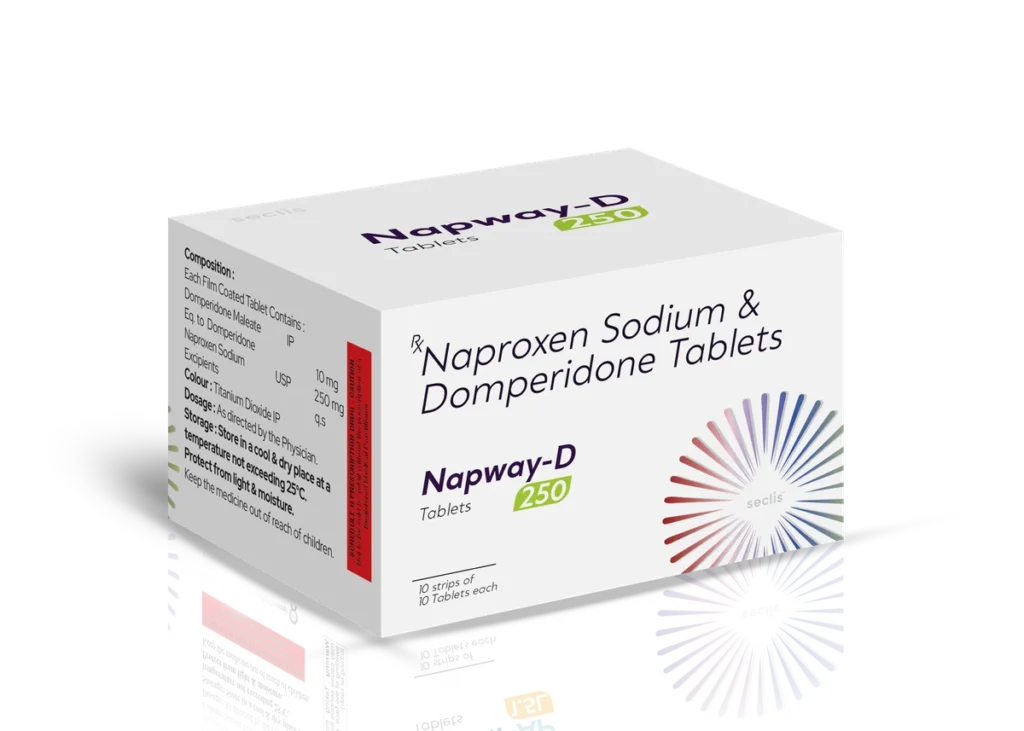
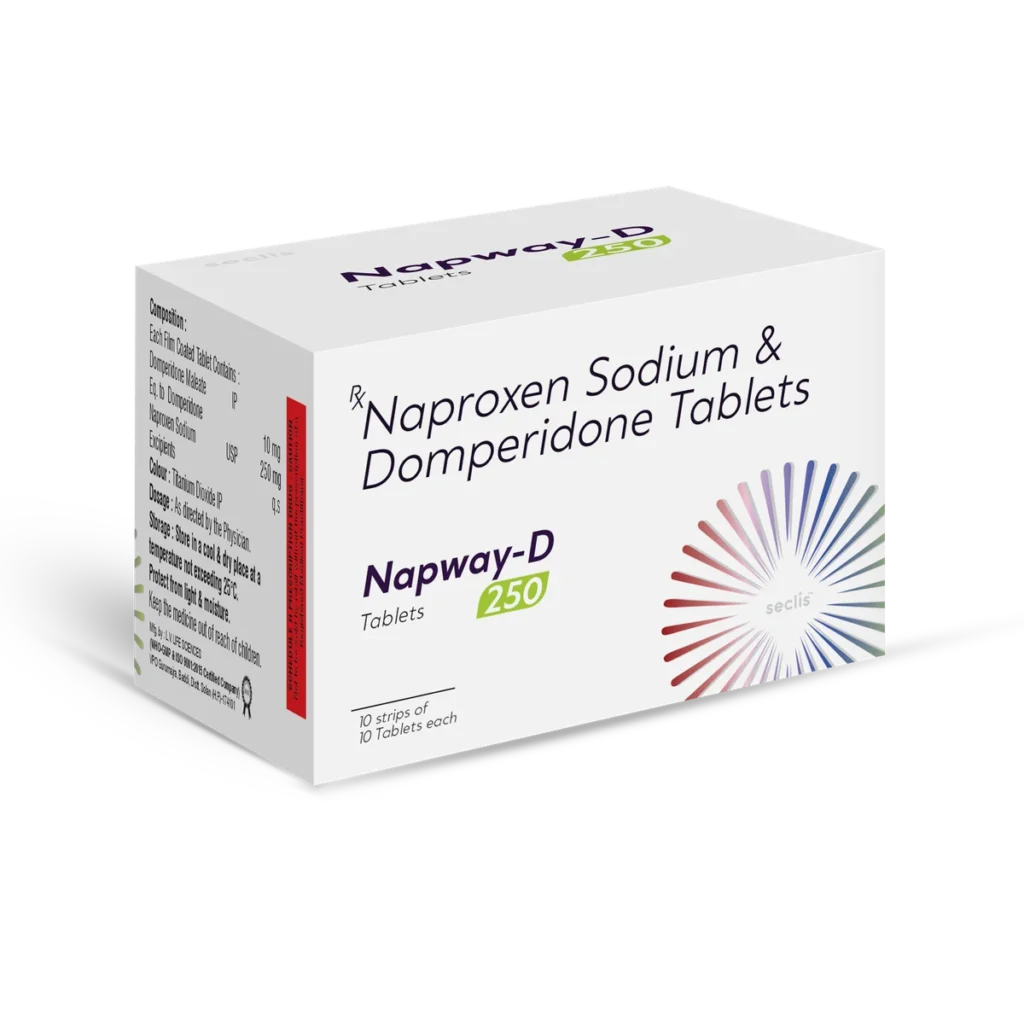
NAPWAY D 250
Naproxen 250mg + Domperidone 10mg
Quick Facts
Key Benefits
Mechanism of Action
Naproxen (250mg) is a propionic acid-class NSAID that inhibits both COX-1 and COX-2 enzymes, reducing prostaglandin and thromboxane synthesis. Among NSAIDs, naproxen has a uniquely long half-life of 12–17 hours — enabling twice-daily dosing versus three to four times daily for ibuprofen or mefenamic acid. This extended half-life provides more sustained anti-inflammatory, analgesic, and antipyretic effects with less frequent dosing. Naproxen has demonstrated superiority to ibuprofen in migraine treatment in multiple clinical trials, possibly related to its sustained prostaglandin inhibition throughout the migraine episode.
Domperidone (10mg) acts as a peripheral D2/D3 receptor antagonist with dual utility in the NAPWAY™ context. First, as a prokinetic it accelerates gastric emptying — particularly valuable for migraine patients where gastric stasis (a component of the migraine attack) delays NSAID absorption and reduces analgesic efficacy. By restoring gastric motility, domperidone enables faster naproxen absorption and earlier analgesic effect. Second, domperidone acts as an anti-emetic at the chemoreceptor trigger zone, addressing the nausea and vomiting that frequently accompany migraine attacks and often prevent oral NSAID administration.
This pharmacological synergy — domperidone accelerating naproxen absorption AND preventing the nausea that would otherwise make oral medication impossible — is the scientific basis for the established combination in migraine management.
Indications
NAPWAY D 250 is indicated for pain conditions where the combination of an NSAID and a prokinetic/anti-emetic provides superior efficacy to either component alone — particularly conditions where gastric stasis delays drug absorption or where nausea accompanies pain.
Migraine (Primary Indication): The naproxen-domperidone combination is specifically recommended by the British Association for the Study of Headache (BASH) and other headache society guidelines for acute migraine management. Naproxen's long half-life provides sustained migraine relief; domperidone restores gastric motility to improve naproxen absorption and suppresses migraine-associated nausea simultaneously.
Musculoskeletal Pain: Arthritis, low back pain, sports injuries, tendinitis, and bursitis where naproxen's 12-hour sustained anti-inflammatory action reduces the dosing frequency burden.
Primary Dysmenorrhoea: Naproxen's COX inhibition reduces prostaglandin-driven uterine hypermotility — the combination with domperidone anti-emetic is useful when menstrual nausea accompanies dysmenorrhoea.
Dental Pain and Post-Surgical Pain: Naproxen's anti-inflammatory effect combined with domperidone's gastric protection and anti-emetic properties for procedures associated with post-operative nausea.
Fever: Naproxen's antipyretic effect with domperidone controlling associated nausea.
Dosage & Administration
Dosage and administration should be as prescribed by a qualified doctor or medical professional. Do not self-medicate. Always follow your physician's instructions regarding dose, frequency and duration of treatment.
Why NAPWAY D 250?
Naproxen-domperidone is one of the few NSAID combinations with a specific guideline recommendation in a major indication — migraine. The British headache guidelines' recommendation of this combination reflects the pharmacological synergy: domperidone's ability to overcome the gastric stasis that delays oral NSAID absorption during a migraine attack is the critical mechanism that makes the combination more effective than naproxen alone.
For neurologists and pain specialists managing migraine, NAPWAY D 250 provides a lower-dose starting option (250mg naproxen) that can be titrated to NAPWAY D 500mg for patients requiring higher naproxen exposure. The NAPWAY D brand range provides a complete naproxen-domperidone portfolio across both doses within Seclis Labs' portfolio.